
China has firmly established itself as a preeminent global hub for sunglasses manufacturing, contributing a substantial share of the world’s total output and playing a pivotal role in both mass-market and high-value segments. For brands and businesses across the globe, sourcing sunglasses directly from China presents compelling advantages, including cost competitiveness rooted in mature industrial clusters, robust production capacity supported by complete supply chains, and a diverse range of offerings spanning functional sport models to fashion-forward designs. This guide explores the complexities of procuring sunglasses from China, covering key aspects such as product categories and technical specifications, leading manufacturing clusters and brands, essential international certifications, core purchasing considerations, and the strategic value of partnering with manufacturers capable of integrating innovation (e.g., smart dimming technology) and compliance.
Table of Contents
I. What Are the Functions of Sunglasses?
The core purpose of wearing sunglasses is to protect your eyes from external harm while enhancing visual comfort. They are not just a fashion item, but also an “outdoor shield” for your eyes.
1. Core Function: Block Ultraviolet (UV) Rays and Prevent Eye Diseases
This is the most critical function of sunglasses and the primary reason you must wear them.
-
- Ultraviolet rays, especially UVA and UVB, can penetrate the eyeball. Long-term exposure may lead to eye diseases such as cataracts and macular degeneration, and in severe cases, it can even affect vision.
- Qualified sunglasses can block over 99% of UVA and UVB rays, acting like a “UV filter” for your eyes and reducing harm at the source.
2. Enhance Visual Comfort and Relieve Eye Fatigue
Glare and reflected light can keep your eyes in a state of tension, and sunglasses can effectively improve this situation.
-
- When sunlight shines directly in summer, or when there is reflection from snow or water surfaces, strong light can make it hard to open your eyes and may even cause “glare,” resulting in blurred vision.
- By reducing the intensity of strong light, sunglasses make the field of vision softer and clearer, preventing eye fatigue and dryness caused by prolonged eye adjustment.
3. Physical Protection to Isolate External Stimuli
In outdoor environments, sunglasses also serve as a “physical barrier” for your eyes.
-
- They block foreign objects such as sand, dust, and flying insects from entering the eyes directly, reducing the risk of infections like conjunctivitis and keratitis.
- They prevent strong winds from blowing directly on the eye surface, stopping excessive evaporation of moisture on the eye surface and relieving dryness when using eyes outdoors.
II. What Are the Classifications of Sunglasses?
Sunglasses are mainly categorized into two core dimensions: function and lens material. The classification logic directly corresponds to usage scenarios and practical needs, helping you efficiently select suitable styles.
1. Categorization by Core Function (Primary Reference for Purchase)
This classification focuses on the core uses of sunglasses, with different functions corresponding to different outdoor scenarios.
-
- Polarized Sunglasses: Can filter out strong light glare from roads, water surfaces, and snow. Suitable for scenarios such as driving, fishing, and skiing, they improve visual clarity and reduce eye strain.
- UV-Protective Sunglasses: Their core function is to block UVA and UVB rays. All qualified sunglasses have this feature, making them suitable for basic outdoor scenarios like daily commuting and shopping, protecting eyes from UV damage.
- Sports Sunglasses: Frames are mostly made of non-slip materials, and lenses have strong impact resistance, which can cope with bumps during intense sports and complex outdoor environments. Suitable for sports such as running, cycling, and mountaineering.
- Photochromic Sunglasses: Lenses can automatically adjust their darkness according to light intensity, suitable for both indoor and outdoor scenarios. Ideal for people who need to switch frequently between indoor and outdoor environments (e.g., commuting office workers).
2. Categorization by Lens Material (Affecting User Experience)
Different materials vary significantly in weight, durability, and light transmittance, which determine the comfort and applicable population of sunglasses.
-
- Resin Lenses: Lightweight, impact-resistant, and unbreakable. They are the current mainstream choice, balancing comfort and safety, suitable for daily use by most people.
- Glass Lenses: High light transmittance and good visual clarity, but heavy and easy to break. Currently, they are rarely used in ordinary sunglasses and are mostly applied in high-end optical fields.
- PC Lenses: Lighter and more impact-resistant than resin lenses, capable of withstanding accidental collisions in children’s use or sports scenarios, but their light transmittance is slightly lower than that of resin lenses.
III.What Is the Most Important Parameter of Sunglasses?
The CAT parameter of sunglasses refers to “Visible Light Transmittance (VLT)”, a key indicator for measuring the ability of sunglass lenses to filter visible light. It directly determines the lightness or darkness of the lenses and their applicable scenarios.
According to GB 39552.1—2020 Sunglasses and Sunglass Lenses – Part 1: General Requirements, sunglasses can be classified into 5 categories based on visible light transmittance:
-
- Category 0 (CAT.0) Light-tint Sunglasses: Transmittance > 80%. The lenses have a very light tint, mainly used for decoration or in environments with extremely weak light.
- Category 1 (CAT.1) Light-tint Sunglasses: Transmittance 43%-80%. The lenses have a relatively light tint, suitable for cloudy days or environments with weak light, such as shopping on cloudy days or taking photos.
- Category 2 (CAT.2) Sunshades: Transmittance 18%-43%. These are medium-tint lenses that can effectively reduce sunlight intensity. They are suitable for most daily occasions, such as daily commuting and general outdoor activities.
- Category 3 (CAT.3) Sunshades: Transmittance 8%-18%. The lenses have a relatively dark tint, which can strongly block sunlight and glare. They are suitable for use in strong light environments, such as the beach, mountain climbing, and skiing, and also for daily wear in areas with intense sunlight.
- Category 4 (CAT.4) Special-purpose Sunglasses: Transmittance 3%-8%. The lenses have the darkest tint, mainly used in special strong light environments such as deserts and snowfields. However, they are not suitable for wearing while driving or walking, as they will seriously affect visual clarity.
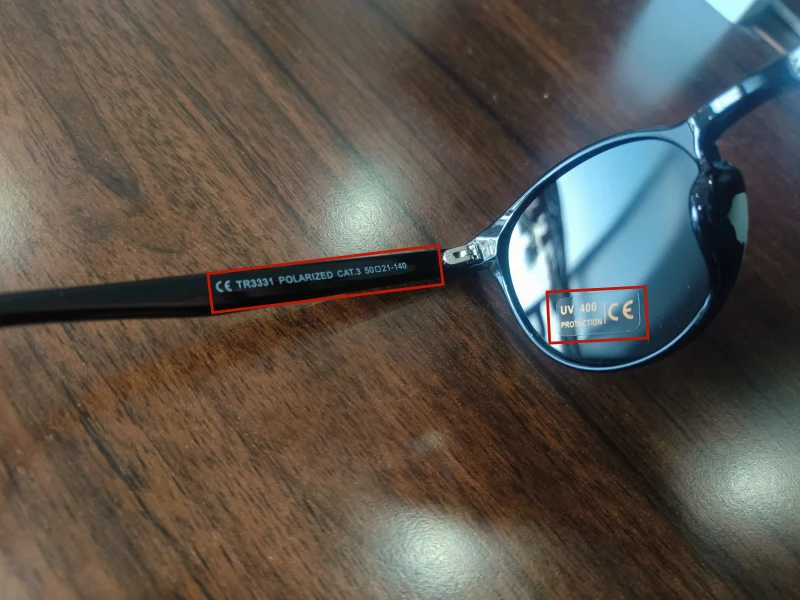
As shown in the picture, “CAT.3” of this sunglasses indicates the protection category, “50*21-140” refers to the frame size, and “UV 400” means it can effectively block ultraviolet rays with wavelengths within 400 nanometers.
IV. Why Source Sunglasses from China?
Sourcing sunglasses from China offers core advantages in supply chain, cost, production capacity, quality and flexibility, meeting procurement needs efficiently:
-
- Mature supply chain: Boasts industrial clusters like Danyang and Shenzhen, with a complete chain from raw materials to production and logistics, holding a high global share.
- Competitive cost: Lower labor and raw material costs result in more advantageous product pricing.
- Sufficient production capacity: Large factories can produce millions of pairs monthly, capable of undertaking large orders.
- Reliable quality: Meets strict standards of markets like Europe and the US, with some brands expanding into the high-end segment.
- Flexible services: Supports customization, responds quickly to trends and personalized needs of different markets, and cross-border e-commerce facilitates procurement.
V. What are the Production Bases of Sunglasses?
The main production bases of sunglasses in China are as follows:
-
- Xiamen, Fujian: It is one of the four major eyewear production bases in China and is known as the “China Sunglasses Production Base”. Its sunglasses industry is characterized by high-end manufacturing and export orientation, with an annual production capacity of approximately 120 million pairs, accounting for 25% of the national total, and the export ratio is as high as 68%. It is home to OEM factories of international brands such as Luxottica and Safilo, as well as local leading enterprises like Yari Optics.
- Wenzhou, Zhejiang: It is a traditional major town for eyewear manufacturing. Relying on the industrial foundation of Ouhai District, known as the “Capital of Chinese Eyewear”, it has formed a complete industrial chain. By the end of 2024, Wenzhou had more than 1,200 eyewear production enterprises, among which over 800 have the capacity to produce sunglasses, with an annual production capacity of 210 million pairs, accounting for 43.75% of the national total. Its products mainly target the mid-to-low-end mass market.
- Duqiao Town, Taizhou, Zhejiang: Known as the “No.1 Eyewear Town in China”, it is one of the six major eyewear production bases in China. Currently, Duqiao Town has 25 eyewear Taobao villages and more than 600 eyewear e-commerce businesses. The annual output of ordinary sunglasses exceeds 200 million pairs and lenses exceed 800 million pairs, with a national market share of over 70%. Its products are exported to more than 50 countries and regions around the world, including Europe, America, Russia, Japan and South Korea.
- Danyang, Jiangsu: It is the world’s largest lens production base and also has a certain scale of sunglasses production. Its eyewear industry mainly focuses on mid-to-low-end lenses, frames and accessories. Relying on a complete industrial chain and large output, it occupies an important position in the domestic eyewear market.
VI. Major Domestic Manufacturers of Sunglasses
-
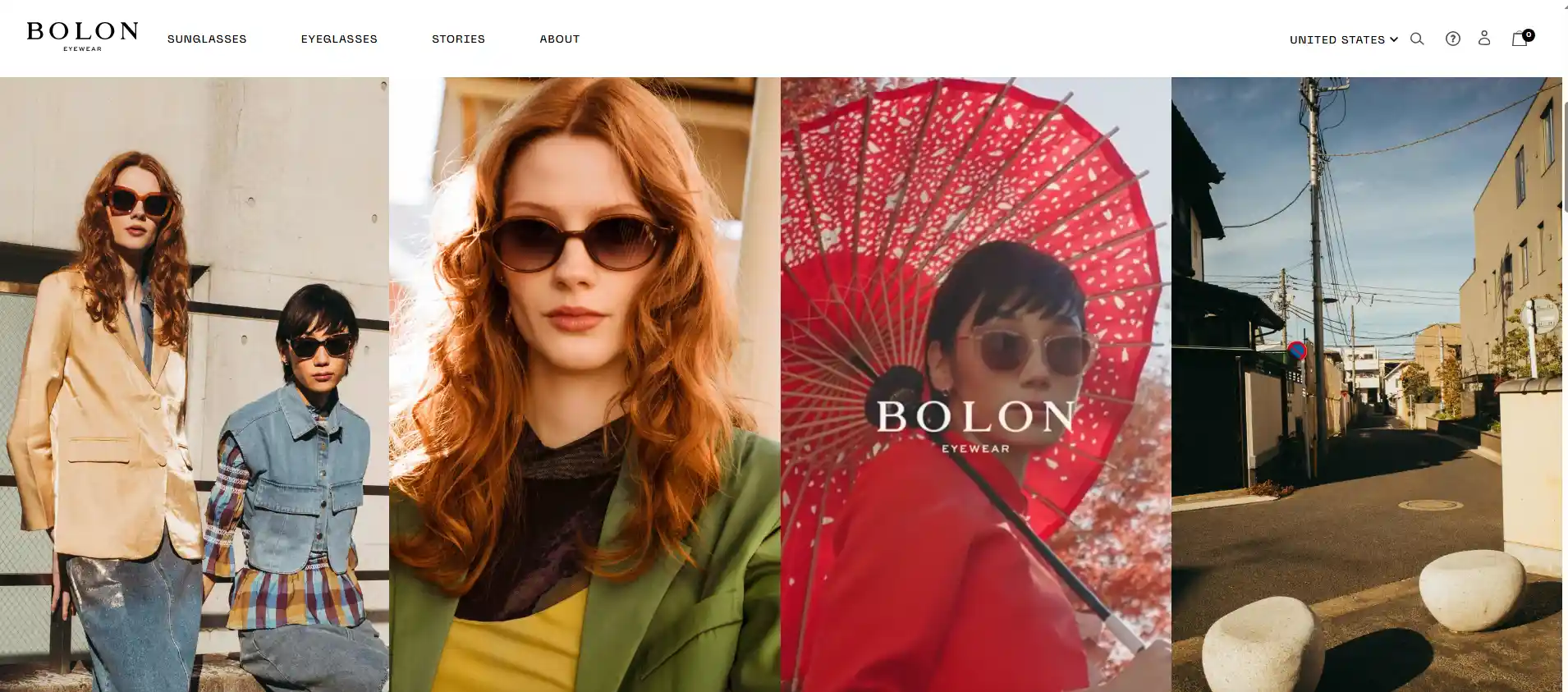
Xiamen Yari Optics Co., Ltd.
A leading enterprise in China’s sunglasses industry. Its core brand BOLON achieved sales of 3.98 billion yuan in 2024, with an 11.4% market share among domestic brands, ranking first. It also operates well-known brands such as Molsion and Prosun, with over 3,800 offline terminals, and is expanding its export business to Southeast Asia. Leveraging Xiamen’s high-end manufacturing foundation, it boasts prominent advantages in design innovation and craftsmanship, and is an important partner of many international brands.
-
Yingchang Group Co., Ltd.
Focused on fashionable sunglasses, its flagship brand PRSR/ PARZIN is recognized for its accurate fashion positioning and exquisite craftsmanship, securing a stable share in the mid-end market and covering mainstream national retail channels. With a complete industrial chain, it integrates R&D, design and manufacturing, standing as a representative enterprise in China’s fashionable sunglasses sector.
-
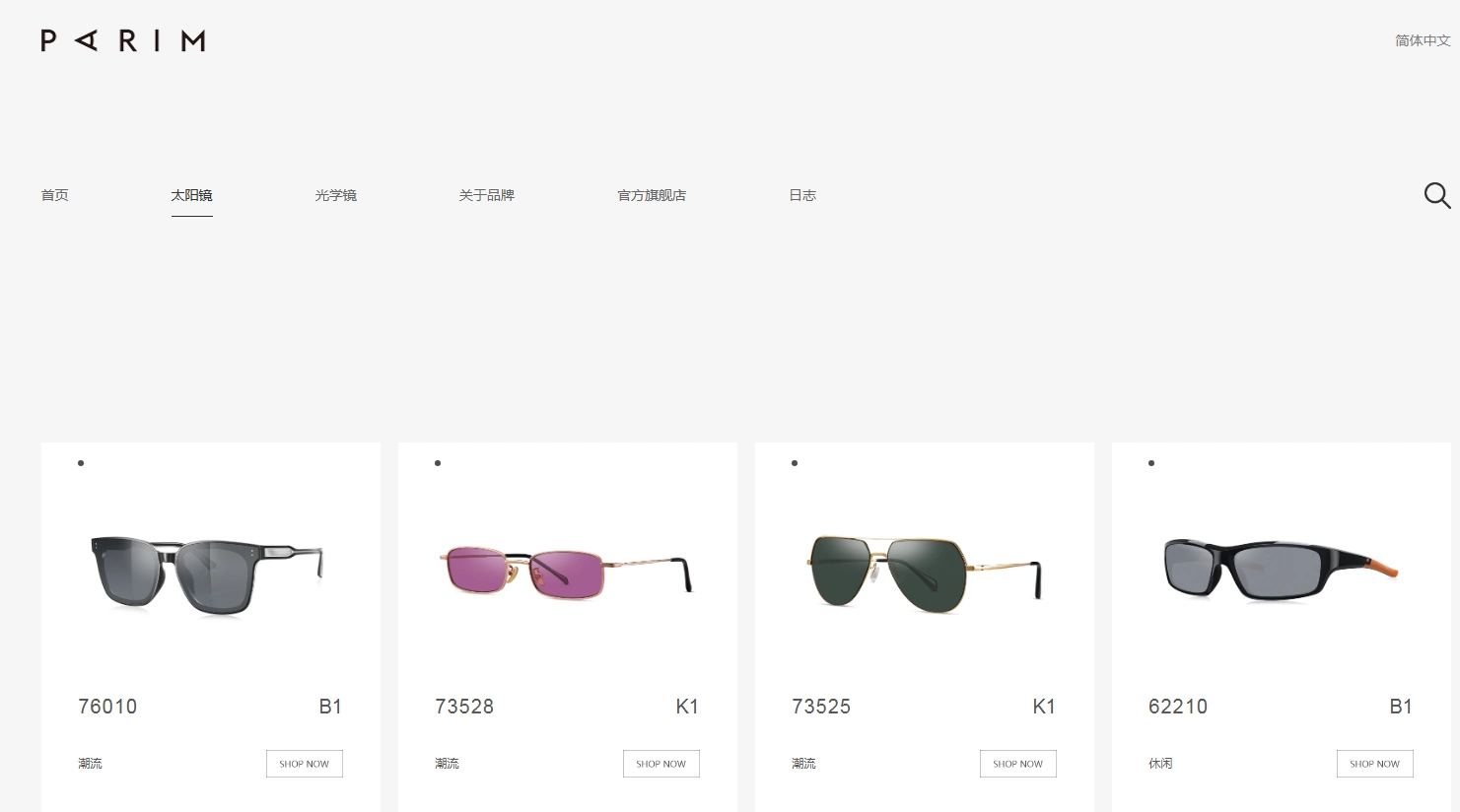
Parim Optics (Xiamen) Co., Ltd.
Founded in 1992, it is one of the early domestic enterprises specializing in independent sunglasses production. Positioned as “light fashion”, it focuses on adapting designs to Eastern facial features and enhancing wearing comfort. Its products combine cost-effectiveness and design innovation, with online-offline channels covering major cities nationwide and deep brand recognition in the mass market.
-
Xiamen Meige Jinding Technology Co., Ltd.
The operator of the international brand Arnold Palmer in China, it also develops and produces its own brands. With “good quality and affordable price” as its core advantage, its products cover fashionable decorative and basic functional sunglasses. Relying on Xiamen’s mature eyewear industry cluster, it excels in supply chain integration and cost control, with products exported overseas.
-
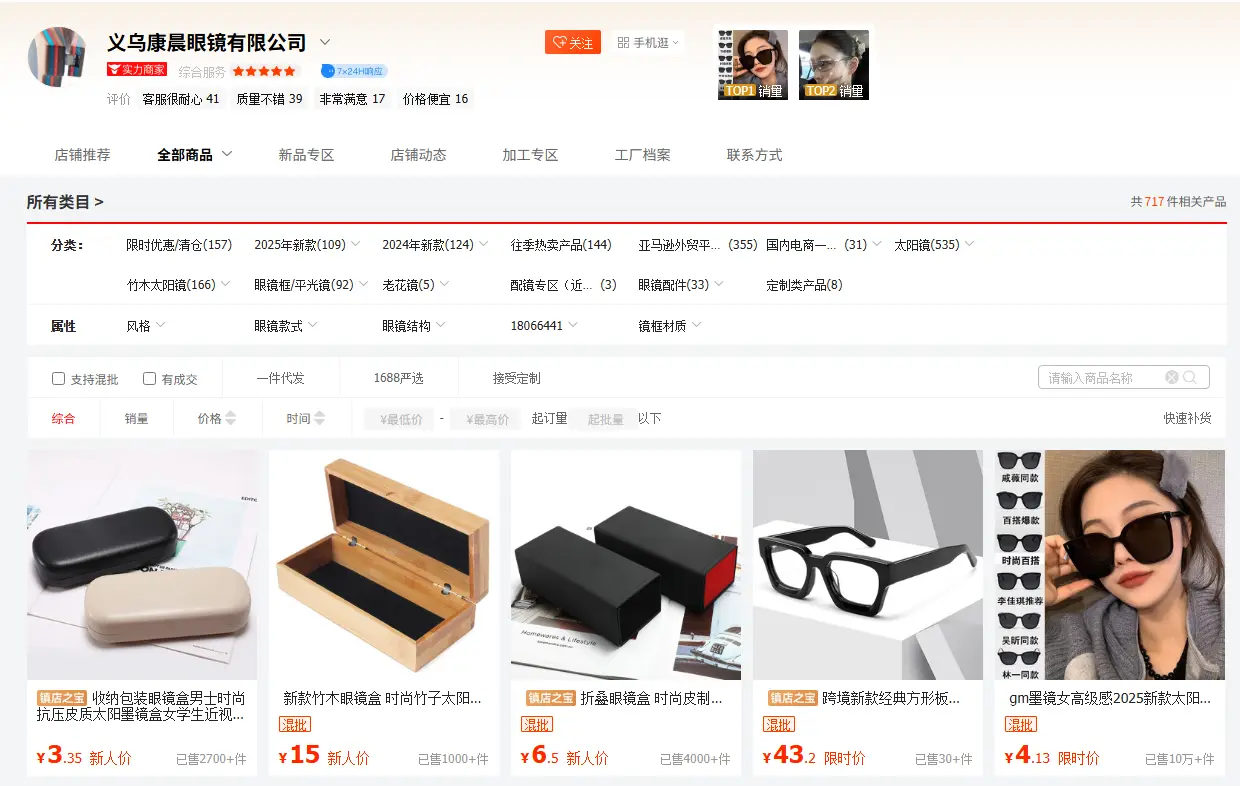
Yiwu Kangchen Glasses Co., Ltd.
Originating from Wenxiang Glasses Store established in 2008, it was officially registered in 2013 and has developed into an integrated enterprise integrating R&D, design, production and sales. It mainly engages in sunglasses, optical glasses and accessories, forming a product system focusing on mid-to-high-end products and featuring bamboo-wooden glasses. With an annual sales volume of 3 million pairs and an annual turnover of 8-12 million US dollars, its products are mainly sold to Western Europe and North America. It has won customer recognition for its advantages of “complete categories, stable quality and timely delivery”, and expands domestic and overseas businesses through Alibaba platforms, self-built websites and international exhibitions.
VII. Precautions for Purchasing Sunglasses: Making an Informed Decision
Once Potential Sunglasses Suppliers and Their Products Have Been Identified, the Following Steps Can Be Followed to Ensure a Smooth Procurement Process
1. Start with samples
Before placing a large order, it’s highly recommended to order samples. This allows you to assess quality in terms of craftsmanship (e.g., smoothness of frame edges without burrs, firmness of hinge connections to avoid loose temples, neatness of lens edge polishing), material performance (impact resistance of polycarbonate lenses, flexibility and durability of TR-90 frames without easy deformation, scratch resistance of lens coatings), and application experience (comfort of nose pads and temple tips without pressing marks, clarity of lenses without distortion, effectiveness of UV 400 protection to block harmful ultraviolet rays, and anti-glare effect of polarized lenses in strong light).
2. Evaluate supplier production capacity
A supplier’s production capacity is key to meeting your needs, especially for bulk orders. Inquire about their daily/monthly output (e.g., number of sunglasses or sets of sunglasses with matching cases) and delivery timelines. Mature high-volume manufacturers are better at handling large orders efficiently, with stricter control over process stability—critical for maintaining consistency in product specifications across batches, such as frame size accuracy (matching the confirmed 50*21-140mm standard), lens color uniformity (aligning with the agreed Pantone number), and protection category consistency (ensuring all CAT.3 lenses meet the same light transmittance standards).
3. Consider after-sales support
A reliable supplier should offer comprehensive after-sales assistance. This includes return/exchange services for issues like frame deformation during shipping, lens scratches, or damaged packaging, as well as rework solutions for bulk products that fail quality standards (e.g., lenses not meeting UV 400 protection requirements, loose hinges affecting wear). For custom orders (e.g., private-label sunglasses with brand logos or custom frame shapes), confirm if they provide revisions for design deviations (such as misplaced logos or inconsistent frame curves with the sample).
4. Calculate total costs
Remember to account for all costs beyond the unit price. This includes shipping fees (sunglasses require shock-proof and pressure-resistant packaging to protect lenses and frames from damage, so packaging volume and protective materials may affect logistics costs), import duties, customs clearance fees, local taxes, and potential extra costs for customization (e.g., branded cases, custom lens coatings like anti-reflective layers) or additional accessories (e.g., cleaning cloths, repair tools for loose hinges).
5. Conduct due diligence
Use tools like Alibaba’s “Audited Supplier” badge or third-party inspection services (e.g., SGS, Intertek) to verify the supplier’s qualifications and factory conditions. You can also hire professional sourcing agencies to check their business status—including financial health, actual production lines, past order fulfillment records (e.g., on-time delivery rate), and compliance with safety standards (e.g., whether materials meet EU CE regulations or China’s GB/T standards for harmful substance limits in eyewear, such as lead and cadmium content in metal frames)—to minimize collaboration risks.
VIII.Choose IMEXsourcing as Your Sourcing Partner for Sunglasses in China
When it comes to procuring high-quality sunglasses from China, partnering with an experienced and reliable sourcing agent is paramount. IMEXsourcing stands out with a comprehensive service suite designed to streamline your acquisition process and secure exceptional value. Here are compelling reasons to select IMEXsourcing for your next sunglasses purchase:
- Extensive Procurement Expertise
IMEXsourcing boasts a profound and long-standing history in the sourcing industry, enabling us to proficiently identify and connect with a wide range of reputable Chinese sunglasses suppliers. Our deep market knowledge ensures we match you with manufacturers known for reliability and superior products, covering everything from high-end professional-grade options (e.g., polarized UV 400 sunglasses for outdoor sports, titanium-frame luxury styles) to mass-produced daily-use styles (e.g., TR-90 lightweight casual sunglasses, plastic-frame fashion designs) and custom-labeled sets.
- Bespoke Design Solutions
We understand that unique brand needs often demand tailored solutions. IMEXsourcing empowers you to commission sunglasses aligned with your brand identity—whether it’s specific materials (such as corrosion-resistant stainless steel frames, impact-resistant polycarbonate lenses, or eco-friendly bamboo frames), styles (wrap-around sports sunglasses for glare reduction, cat-eye fashion sunglasses for aesthetics, or foldable travel-friendly designs), or practical details (custom lens tints matching your brand palette, branded logos on temple arms, or personalized packaging with cleaning cloths). Each product is precisely engineered to your specifications, ensuring perfect alignment with your brand positioning.
- Thorough Supplier Verification
Our commitment to quality begins with rigorous due diligence. We conduct comprehensive factory audits for all potential manufacturers, verifying their production capabilities (e.g., daily output of sunglasses or sets with matching cases, ratio of manual polishing to automated assembly lines), assessing quality control protocols (e.g., lens UV protection testing, hinge durability inspection, frame deformation resistance checks), and ensuring full compliance with domestic and international industry standards (such as China’s GB/T standards, EU CE certification, US ANSI Z80.3 regulations) and legal requirements.
- Expert Price Negotiation
Leveraging our veteran status and in-depth understanding of market dynamics, IMEXsourcing excels in negotiation. This expertise allows us to secure the most favorable pricing and terms with top-tier sunglasses manufacturers renowned for their craftsmanship (e.g., smooth frame edges, precise lens alignment), material control (e.g., lead-free metal frames, scratch-resistant lens coatings), after-sales service, and cost efficiency, optimizing your investment.
- Stringent Quality Assurance
IMEXsourcing implements a robust quality management framework spanning the entire procurement cycle, including careful supplier selection, diligent production oversight (such as checking frame size accuracy, lens color uniformity, and hinge tightness), and thorough pre-shipment testing (such as UV 400 protection verification, lens clarity assessment, and packaging shock-resistance checks), guaranteeing the integrity and performance of your sunglasses.
IX. Conclusion
In conclusion, the Chinese sunglasses market presents abundant opportunities for global buyers. By carefully researching product categories (from affordable daily-use TR-90 plastic-frame sunglasses to high-end professional-grade polarized titanium-frame styles and UV 400 protective sports sunglasses), clarifying technical specifications (such as material safety standards, frame size customization for diverse facial shapes, and lens anti-glare performance), and following a systematic procurement process, importers can source high-quality, cost-effective sunglasses to meet diverse market demands—whether for retail, outdoor brand collaborations, or custom private-label needs.
Notably, core production hubs like Xiamen (Fujian), Wenzhou and Taizhou (Zhejiang), and Danyang (Jiangsu) dominate China’s sunglasses industry, collectively accounting for over 85% of the national total output and hosting tens of thousands of industry-related manufacturers and supporting enterprises (such as lens suppliers and frame component factories). While many local manufacturers excel in production efficiency (e.g., large-scale automated assembly lines for frame polishing and lens mounting), product diversity (covering everything from basic casual sunglasses to custom CAT.3 protective styles), and adherence to quality standards (such as China’s GB/T standards for eyewear and lens UV protection), a significant number lack independent foreign trade capabilities—such as expertise in cross-border logistics (e.g., shockproof packaging for lens protection), multilingual client support, and compliance with global certification requirements (e.g., EU CE, US ANSI Z80.3 regulations for eyewear safety). This is where partnering with IMEXsourcing becomes your optimal choice: we bridge the gap between these capable manufacturers and global buyers, leveraging our local resources and trade expertise to streamline procurement, ensuring you access top-tier sunglasses without the barriers of limited foreign trade capacity.
Moreover, collaborating with reliable partners like IMEXsourcing and conducting thorough due diligence (including factory verification, pre-shipment quality inspections—such as testing lens UV 400 protection and frame hinge durability—and cost transparency checks) not only makes the procurement process efficient but also minimizes risks associated with international trade—such as quality inconsistencies (e.g., uneven lens color), delivery delays, or certification non-compliance. This strategic approach not only enhances the value of your procurement (securing high-quality sunglasses at competitive prices) but also fosters long-term, trustworthy business relationships. In turn, this contributes to sustained profitability for your business and strengthens your competitiveness in the global sunglasses market.