Direct from China: 1688.com, the Ultimate Low-Cost Wholesale Source
11/24/2025
Speaking of China’s shopping platforms, Alibaba is a well-known brand that cannot be ignored. Its four major shopping platforms — Alibaba.com, 1688.com, Taobao.com and AliExpress — cover diverse trade scenarios, and 1688.com stands out for its exceptional cost-effectiveness. This article will elaborate on the characteristics and practical usage guidelines of the 1688.com.
Table of Contents
I. Overview of Alibaba’s Four Major Shopping Platforms
Below is a core introduction to Alibaba’s four major shopping/trade platforms, namely Alibaba.com (International), 1688.com (), Taobao.com, and AliExpress. It helps you quickly distinguish and select the right platform for your needs.
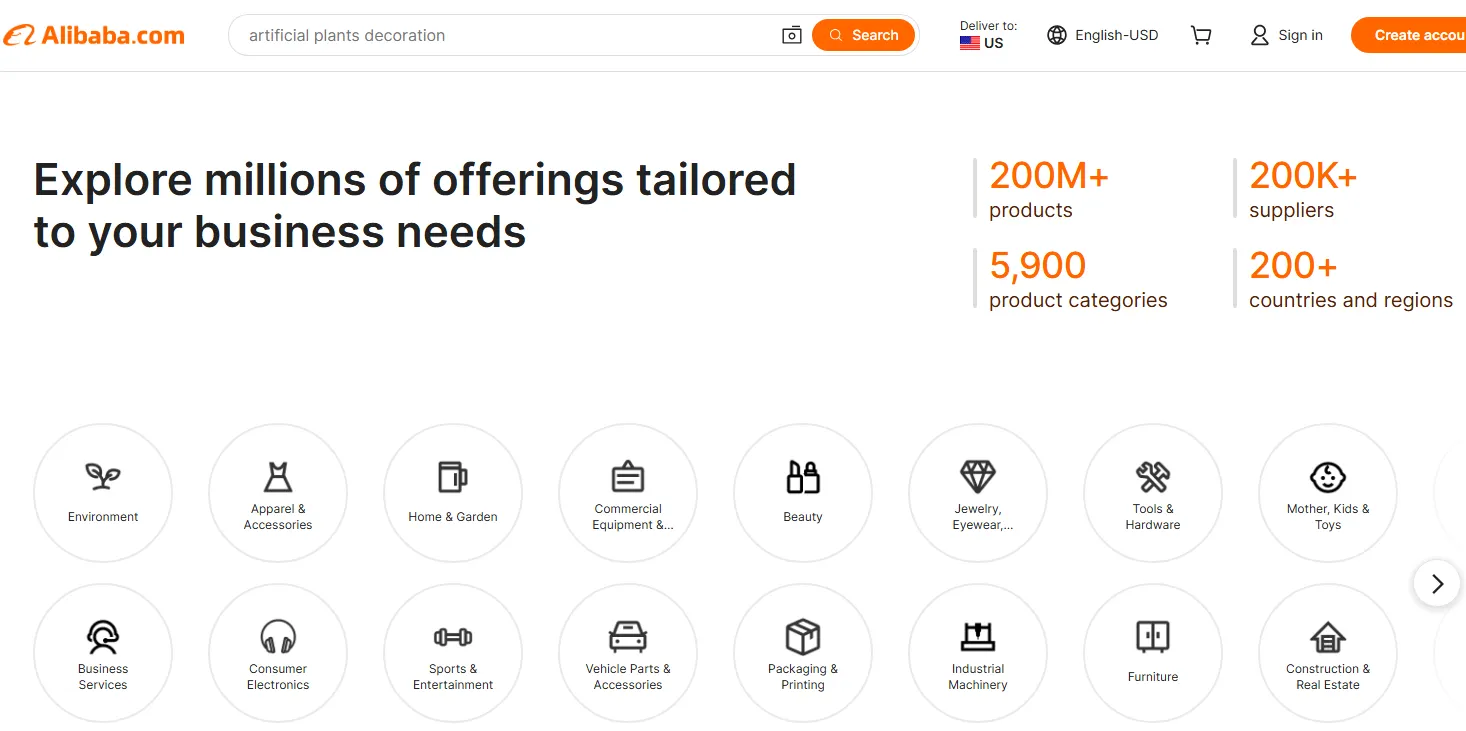
Positioning: A global B2B import and export trade platform launched in 1999. It serves corporate buyers and suppliers worldwide, focusing on bulk procurement, customization, and cross-border trade.
Key Features: Supports multiple languages and currencies, provides foreign trade payment and settlement solutions such as L/C (Letter of Credit) and TT (Telegraphic Transfer), and offers full supply chain services including customs clearance, logistics, and factory audits. It covers a complete range of categories including industrial products, consumer goods, and raw materials.
Applicable Scenarios: Enterprise export order acquisition, overseas bulk purchasing, and customized production cooperation. 🌐
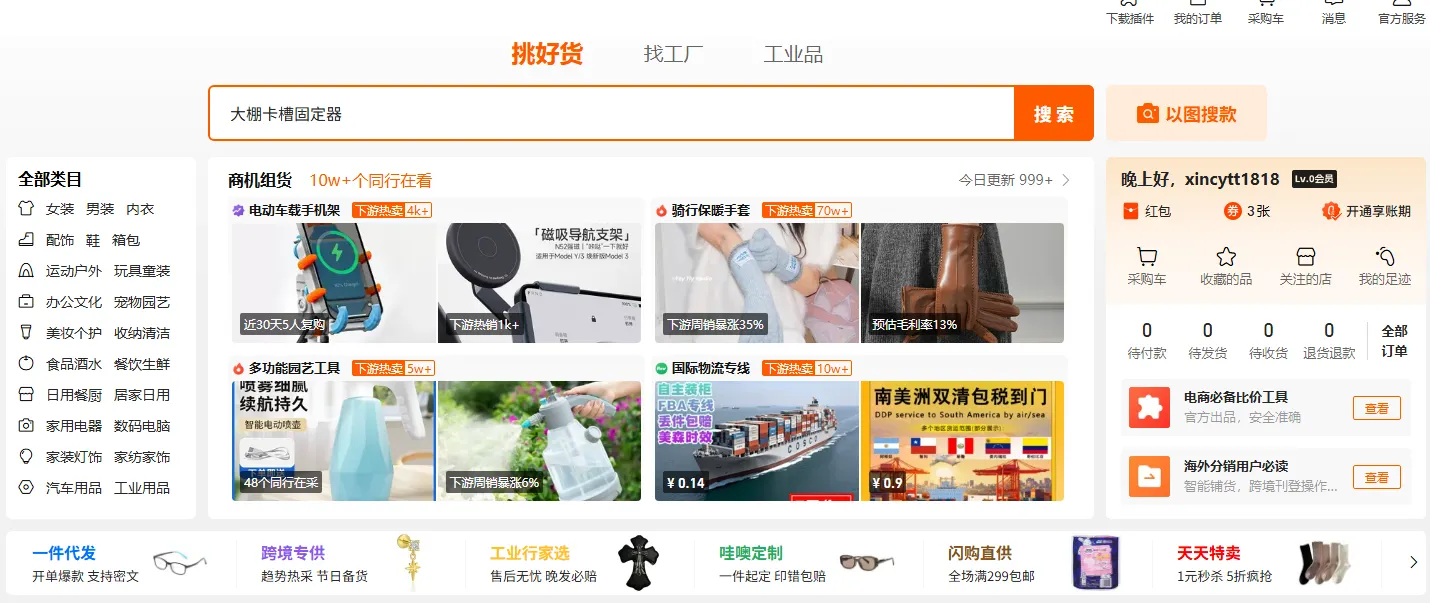
Positioning: A domestic B2B wholesale platform in mainland China, evolved from Alibaba’s early domestic website. It focuses on domestic industrial belts and source suppliers, mainly engaging in spot wholesale, low-minimum-order-quantity purchases, and corporate procurement.
Core Audience: Sellers on online or mobile platforms like Taobao (Tmall), Douyin (TikTok), JD and PDD (Temu), physical store owners, purchasers from small, medium, and micro enterprises, and individuals making small-batch purchases.
Key Features: Concentrates source factory goods from industrial belts, supports dropshipping, customized processing, and corporate bulk purchasing. It provides merchant certification and guarantee services such as Integrity Pass, covering categories including apparel, 3C products, home furnishings, and industrial goods.
Applicable Scenarios: Stock preparation for online stores, purchasing for physical stores, corporate administrative/production procurement, and small-batch trial sales. 📦
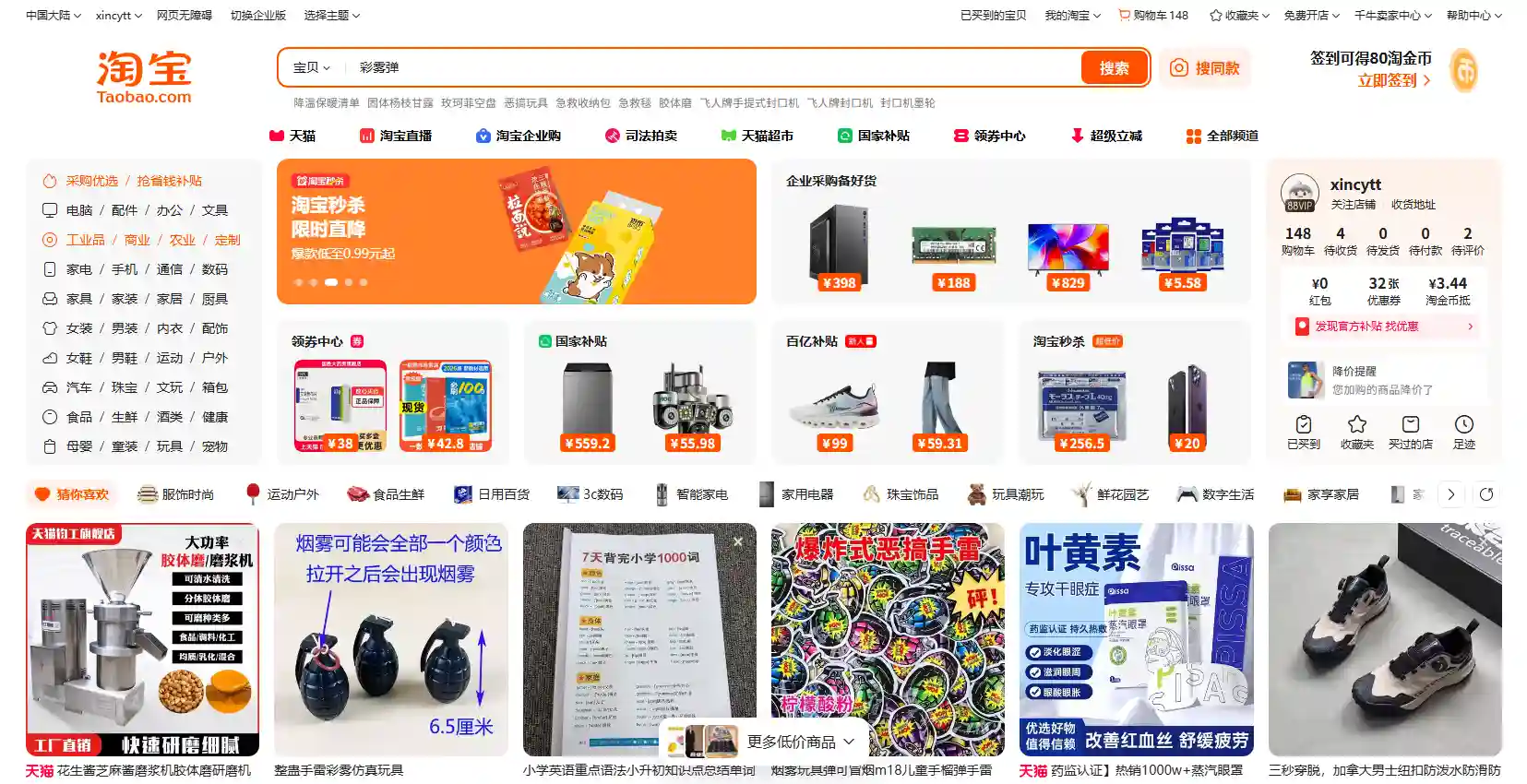
Positioning: Tmall.com & Taobao.com are comprehensive retail platforms in mainland China, Taobao.com was launched in 2003. Based on the C2C marketplace model, it integrates B2C (tmall.com) and content e-commerce, covering full-category retail business.
Core Audience: Domestic individual consumers, small and medium-sized merchants, and brand merchants (including tmall.com – Taobao enterprise stores).
Key Features: Boasts a rich variety of products and flexible pricing, supporting marketing models such as live-streaming commerce. It is equipped with Alipay secured transactions, Cainiao Logistics, and a sound after-sales service system. It also offers diverse supplies including second-hand goods, auctions, and characteristic agricultural products, exclusively serving domestic C-end customers in China.
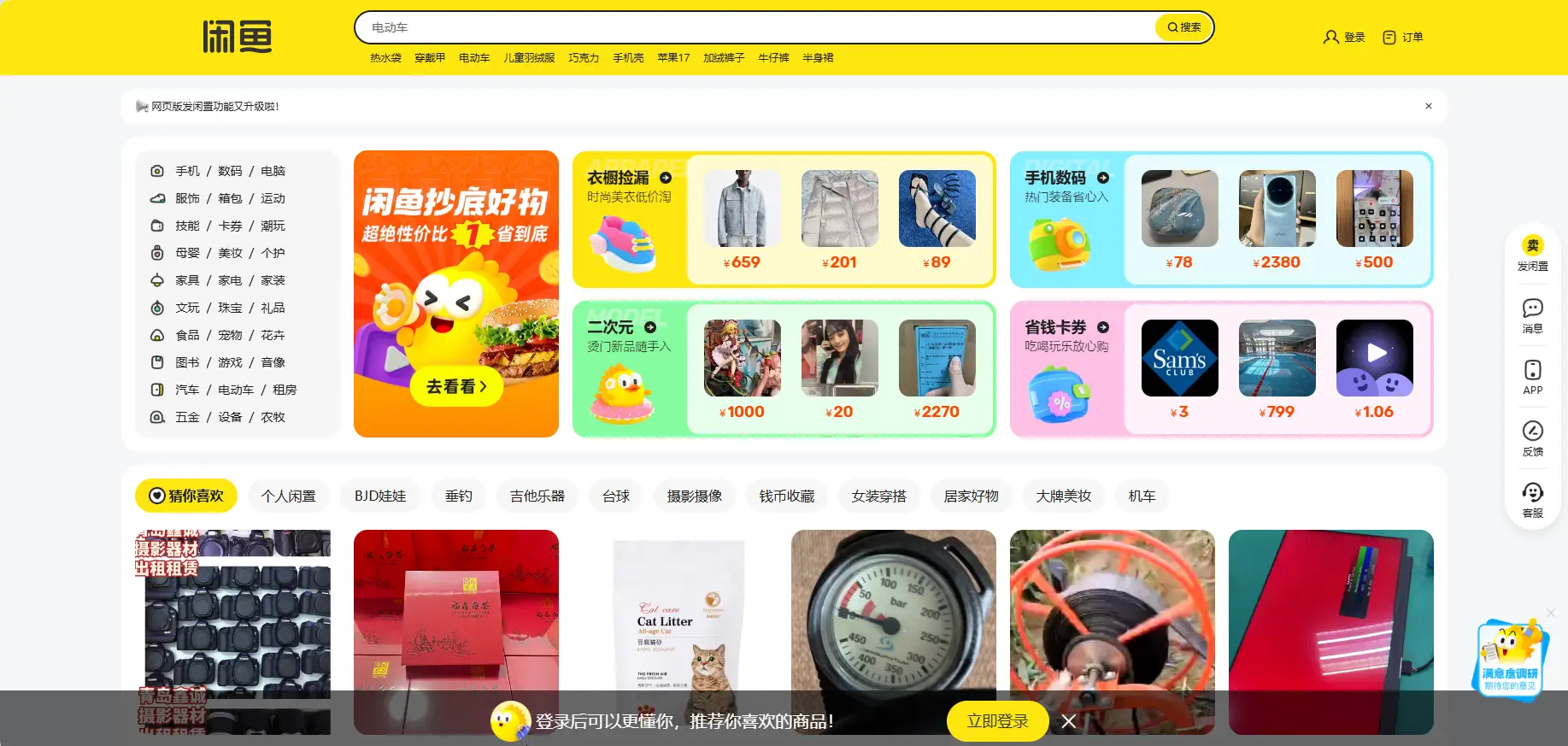
Applicable Scenarios: Daily personal shopping, purchasing niche/customized products, placing orders via live streams, and second-hand transactions (goofish.com). 🛒
Positioning: A cross-border B2C retail platform targeting global consumers, launched in 2010. It focuses on the “one store sells to the world” model, catering to both small-batch wholesale and retail businesses.
Core Audience: Overseas individual consumers, small wholesalers, and overseas purchasing agents.
Key Features: Covers over 200 countries and regions worldwide with multi-language sites, supporting international logistics and cross-border payments. It has launched the AliExpress Choice service (including free shipping, return policy, and delivery time commitment). Its advantageous categories include 3C products, apparel, and home furnishings, with regular global promotion campaigns.
Applicable Scenarios: Chinese merchants engaging in cross-border retail, overseas consumers directly purchasing Chinese goods, and small-batch cross-border wholesale. 🚢
Since its establishment in 1999, as the pioneering business segment under Alibaba Group, 1688 has evolved from an initial B2B information directory platform into a pivotal commercial ecosystem hub covering the entire industrial chain. Today, the platform connects millions of source factories and serves hundreds of millions of buyers (the majority being wholesalers). Its unique dual – sided attribute (linking supply and demand) endows it with distinct advantages alongside inherent drawbacks.
II. Core Advantages: Irreplaceability Rooted in Industrial Clusters
1688’s core competitiveness stems from its solid industrial foundation and precise positioning, forming three key advantages that have secured its long – standing leadership in the B2B sector.
Solid Supply Chain Foundation with Prominent Source – Direct Attributes
As a leading domestic platform for source factory goods, 1688 has established a nationwide network of industrial clusters. By the end of 2023, it had gathered 1 million source manufacturers, covering 100 industrial locations each with a 10 – billion – yuan scale, and the annual number of active products reached 150 million. Ranging from apparel and luggage in the Pearl River Delta (The Guangzhou-Shenzhen Urban Agglomeration), electronic components in the Yangtze River Delta (The Shanghai-Nanjing-Hangzhou Urban Agglomeration), to small commodities in Yiwu and furniture in Foshan, the platform directly links factories to buyers, completely simplifying the traditional supply chain model of “factory – intermediate dealer – buyer”. This source – direct feature not only enables buyers to access cost – effective products such as “high – end brand alternatives” and “factory – same – source goods” but also achieves the precise matching of factory production capacity with market demand, maximizing the operational efficiency of the supply chain.
Comprehensive Dual – sided Ecosystem and Strong User Stickiness
After more than two decades of development, 1688 has built a large – scale and diverse supply – demand ecosystem. Data shows that the number of merchant members on the platform has exceeded 1 million, with buyer members reaching 200 million, including 65 million B – end buyers. The annual transaction volume has stabilized at 800 billion yuan. The platform offers diverse sourcing scenarios: it provides one – click listing services for sellers on domestic e – commerce platforms such as Taobao and Douyin, features cross – border listing functions for overseas markets, and delivers customized solutions for physical store owners and corporate procurement teams.
III. Existing Disadvantages: Inevitable Challenges Amidst Scale Expansion
In the process of rapid development and continuous expansion of both supply and demand sides, 1688 has exposed a series of issues that hinder the upgrading of platform experience. These challenges mainly focus on merchant management, service standards, competitive barriers, and international adaptation.
Uneven Merchant Qualifications and Difficult Quality Control
The million – level merchant scale brings abundant supply but also leads to distinct stratification in merchant qualifications. Some small – sized manufacturers lack complete certifications and standardized quality inspection processes, resulting in “same – style but different – quality” products on the platform. A handful of merchants even engage in false advertising and pass off inferior products as high – quality ones to seize traffic, which not only damages the legitimate rights and interests of buyers but also undermines the operations of high – quality merchants.
Inconsistent Service Standards and Differentiated After – sales Experience
Most merchants on 1688 are small and medium – sized enterprises (SMEs) and factories, which generally lack mature e – commerce service capabilities, leading to uneven service quality. Some factory merchants, accustomed to offline transactions, face problems such as delayed online responses and insufficient professional communication. In the after – sales process, disputes frequently arise regarding the liability for return shipping costs and compensation for quality issues. Moreover, the efficiency and standards of the platform’s intervention in mediation are not yet unified. This non – standardized service model stands in sharp contrast to the sophisticated service systems of C – end e – commerce platforms and has become one of the primary pain points for user complaints.
Fierce Homogeneous Competition and Weakened Differentiated Advantages
In popular categories such as apparel and small commodities, a large number of merchants adopt similar production technologies and pricing strategies, intensifying homogeneous competition. Many SMEs lack core technologies and independent design capabilities, and can only compete for the market through low prices. This not only compresses their own profit margins but also traps the platform in a vicious cycle of “price wars”. As a result, buyers are prone to falling into low – price traps and purchasing inferior products during actual procurement.
Inadequate International Adaptation and Language Barriers
The platform’s core customer base consists mainly of domestic merchants, with a purely Chinese – language environment and insufficient support for foreign languages. Meanwhile, most merchants on 1688 lack foreign language proficiency and are basically unable to communicate directly with overseas customers in other languages, which severely restricts the platform’s international development.
IV. Portrait of 1688’s Customer Base
1688’s customer base has evolved beyond professional B2B buyers to include two key groups: procurement agents acting like large-scale consumers and aggregated small and medium-sized businesses (SMBs). These distinct segments, each with unique demand profiles, together form the platform’s vast and dynamic buyer ecosystem.
Core Business Customers: Small and Medium – sized E-commerce Sellers and Physical Store Operators
This group constitutes the core buyers of 1688, including small and medium – sized (SMEs) e-commerce sellers on platforms such as Taobao, Pinduoduo, Douyin, and Kuaishou, as well as physical store owners and community group buying leaders, accounting for over 60% of the total buyers. Their core demands focus on “stable supply sources + high cost-effectiveness + fast delivery”. They have high procurement frequency and strong repurchase willingness, and are highly dependent on the platform’s one – click listing and dropshipping services. Among them, the proportion of young e – commerce sellers under 30 is increasing year by year, accounting for 50% of the total young buyers. This group attaches greater importance to digital services such as AI product selection tools and market trend analysis.
Corporate Procurement Customers: SMEs and Institutional Buyers
This category includes administrative procurement and production material procurement of various SMEs, as well as material procurement of institutions such as schools and hospitals, accounting for approximately 20% of the total buyers. Their procurement is characterized by “large batch sizes + stable demand + high qualification requirements”. They pay more attention to rigid indicators such as the factory’s production capacity, quality inspection reports, and delivery cycles, and frequently use inquiry tools or plug-ins for price history. For some large – scale procurement projects, customers also conduct offline inspections through platform connections and sign formal procurement contracts.
Cross – border Platform Customers
A growing number of international e – commerce platforms choose to source goods on 1688 and list them on their own platforms via cross – border listing. After overseas customers place orders, the products are directly delivered to them from China via international courier services.
V. Portrait of 1688’s Merchant Groups
1688’s merchant groups are centered around industrial clusters, presenting a structural feature of “factories as the mainstay, traders as supplements, and service providers as complements”. Different types of merchants have distinct positioning and demands.
Source Factory Merchants: Core Supply Force
Accounting for approximately 50% of the total merchants, they are the core suppliers of goods on the platform. They are mainly distributed in the Yangtze River Delta, the Pearl River Delta, and major inland industrial clusters, covering various categories such as electronics, apparel, furniture, and hardware. Their core advantages lie in stable production capacity and low prices, but they generally lack brand awareness and online operation capabilities, with an urgent need for digital transformation. Their primary motivation for settling on the platform is to expand sales channels and absorb production capacity, and they have a strong demand for services such as AI marketing tools and online customer acquisition training.
Traders and Wholesalers: Channel Integrators
Making up about 30% of the merchants, this group includes regional wholesalers and brand agents. Although not direct manufacturers, they possess strong capabilities in supply integration and channel resources. They often act as agents for products from multiple manufacturers, providing “one – stop procurement” services for buyers, which are particularly suitable for the small – batch and multi – category procurement needs of small and medium – sized buyers. Their core competitiveness lies in supply chain integration capabilities and service response speed, with profit models mainly based on earning commodity price differences.
Brand Merchants and Service Providers: Ecosystem Complements
Accounting for roughly 20% of the merchants, this category includes OEM factories for well – known brands, independent brand merchants, and e – commerce service providers. OEM factories leverage their qualifications as suppliers for top brands to promote the “same – source quality” label; independent brand merchants create distinctive products through differentiated design; e – commerce service providers offer supporting services such as store operation, product photography, and logistics distribution for SMEs. Positioned at the mid – to high – end market, these merchants play a crucial role in enhancing the product quality and service standards of the platform.
In summary, 1688 is an extremely valuable procurement platform. Many products that are hard to find on platforms such as Alibaba.com and AliExpress are available on 1688. However, due to differences in the platform’s after – sales service standards and language barriers, overseas customers face significant difficulties in purchasing directly on 1688. For this reason, we have established IMEXsourcing. We can provide professional one – stop procurement services for overseas customers on 1688: you can select the required products on 1688 independently, and we will take full responsibility for subsequent processes including procurement coordination, goods consolidation and packaging, and after – sales service.
Message us for more information
Please let us know your request, we will get back to you within 24 hours.