AI Glasses are the next frontier of wearable tech, blending the familiarity of classic frames with the power of an AI assistant. They act as your “second pair of eyes,” offering features like real-time captioning, voice-activated search, and immersive POV recording—essentially moving the smartphone’s most essential functions directly into your line of sight.
The Chinese industry leads the charge through a combination of manufacturing scale and specialized innovation. While others are still in the prototyping phase, Chinese developers have already optimized the “lightweight-to-power” ratio, delivering sleek, stylish glasses that don’t compromise on performance. Their advantage is simple: the ability to turn cutting-edge AI concepts into affordable, consumer-ready products faster than anyone else on the planet.
Table of Contents
I. Core Capabilities of AI Smart Glasses
In 2026, AI smart glasses have transcended their status as mere accessories to become our most intimate “cognitive partners.” Unlike the bulky prototypes of the past, today’s devices seamlessly blend high-end optics with advanced artificial intelligence to offer three game-changing capabilities:
-
Multimodal Environmental Awareness: Powered by next-gen sensors and models like Gemini 3, these glasses don’t just record—they “understand.” Whether you’re looking at a complex engine repair, a foreign menu, or ingredients on a kitchen counter, the AI can analyze the visual feed in real-time to provide step-by-step guidance, nutritional facts, or instant contextual answers.
-
Seamless Real-Time Translation: Breaking language barriers is now as simple as putting on your glasses. With binocular waveguide displays, the glasses can overlay live subtitles directly onto your field of vision during a conversation. Supporting over 150 languages and dialects, it allows for fluid, natural communication without ever glancing at a phone.
-
Intuitive POV Content Creation: We have entered the era of “Eyes-on” storytelling. High-definition 4K cameras and specialized stabilization chips allow creators to capture authentic, first-person perspectives hands-free. From professional vlogging to documenting industrial workflows, the transition from handheld to POV has made capturing life’s moments more immersive than ever.
II. What Are the Classifications of AI Glasses?
AI glasses are currently in a period of rapid development. Based on their functional focus and hardware form factors, the current market can be categorized into four main types:
1. Smart Audio Glasses
The most popular type, featuring a design nearly identical to traditional frames.
- Core Features: Built-in Bluetooth speakers and microphones for music, calls, and AI voice assistants.
- AI Applications: Interaction with AI (e.g., ChatGPT, Gemini) for weather updates, news, scheduling, or real-time voice translation.
2. AR Display & Information Prompting Glasses
These utilize micro-displays (such as Micro-OLED) to project information directly into the wearer’s line of sight.
- Core Features: Teleprompters, real-time navigation arrows, translation subtitles, and notification pushes.
- AI Applications: Real-time Multilingual Translation and AI-driven tour guiding.
3. Multimodal Perception & Visual Recognition Glasses
Equipped with high-definition cameras, these glasses “see” the world alongside the user.
- Core Features: Photography, video recording, object recognition, and barcode scanning.
- AI Applications: Object identification, accessibility for visually impaired, and industrial maintenance.
4. Spatial Computing & XR Glasses
The most powerful category, designed for complex interactions and immersive experiences.
- Core Features: 3D modeling, virtual large-screen displays, and gesture interaction.
- AI Applications: SLAM (Simultaneous Localization and Mapping), human posture recognition, and complex MR/VR interaction.
Quick Comparison Table
| Category | Core Value | Aesthetics | Primary Use Case |
|---|---|---|---|
| Audio Glasses | Voice Interaction | Like regular glasses | Daily commute, driving, office |
| Display/AR | Real-time Prompts | Slightly thicker lenses | Meetings, navigation, logistics |
| Visual AI | Multimodal Recognition | Visible camera module | Tourism, accessibility, industry |
| Spatial/XR | Immersive Display | Goggle-like/Opaque | Cinema, gaming, 3D design |
III. What Is the Most Important Parameter of AI Glasses?
Essential Parameters of AI Glasses: A Technical Analysis
When evaluating AI glasses, the specifications can be broken down into three core dimensions: Wearability, Interaction, and AI Performance. Here is a simplified analysis of the most important parameters.
1. Wearability (The Foundation)
Comfort determines whether a user will wear the device daily or leave it on the shelf.
- Weight: Standard prescription glasses weigh between 20g and 30g. High-quality AI glasses should ideally stay under 50g. Anything over 70g often causes noticeable pressure on the bridge of the nose and ears during long-term use.
- Lens Compatibility: The ability to support prescription (myopia/hyperopia) lenses is crucial for expanding the user base to those who already wear glasses.
2. Interaction & Perception (Functional Core)
These parameters define how the AI “hears, sees, and speaks” to the user.
- Camera Resolution: Typically ranging from 8MP to 13MP. Beyond taking photos, the camera’s primary role is providing visual data for AI tasks like object recognition and real-time text translation.
- Microphone Array: Noise cancellation is vital. In loud outdoor environments, the quality of the mic array determines if the AI can accurately capture your voice commands.
- Audio Output: Directional sound technology is preferred to ensure clear audio for the user while preventing “sound leakage,” which protects privacy in public spaces.
3. Display & Endurance (Advanced Specs)
- Display Brightness: For glasses with screens (AR types), brightness must reach at least 1000 nits to remain visible under direct sunlight.
- Battery Life: This includes standby time and continuous active time (voice/recognition). Most current models require a charging case to get through a full day of heavy use.
- Connectivity: Bluetooth 5.3 or higher is the industry standard, ensuring stable connections and low latency between the glasses and the smartphone.
4. AI Intelligence (The “Soul”)
- Multimodal Capability: The ability for the AI to process voice and visual data simultaneously (e.g., looking at a menu and asking, “Which dish is healthy?”).
- Response Latency: The time elapsed from a voice command to an AI response. Ideally, this should be under 1.5 seconds for a natural user experience.
IV. Why Sourcing AI Glasses from China is a Strategic Edge
China has emerged as the global powerhouse for AI glasses, combining a world-class manufacturing ecosystem with rapid technological innovation. For B2B buyers and brands, sourcing from China offers several irreplaceable advantages:
1. Unmatched Supply Chain Efficiency
The “Silicon Valley of Hardware” (the Pearl River Delta) hosts over 80% of the global AI glasses supply chain. From camera modules and optical waveguides to Micro-LED displays, every core component is manufactured within a tight industrial cluster. This proximity allows for prototyping in days rather than months, significantly shortening your time-to-market.
2. Rapid Hardware-Software Iteration
Chinese manufacturers are known for their “speed to market.” Unlike traditional cycles, Chinese tech firms iterate their hardware and AI integration monthly. This ensures that the products you source are always equipped with the latest features, such as multimodal AI perception and real-time multilingual translation.
3. Open Ecosystem & Compatibility
Unlike some global giants that lock users into closed software ecosystems, many Chinese AI glasses manufacturers adopt an open approach. Their devices often support multiple Large Language Models (LLMs) including OpenAI, Llama, and Gemini, providing the flexibility needed for different international markets.
4. Superior Cost-Performance Ratio
Leveraging massive economies of scale and advanced automated production, China provides high-performance AI hardware at a fraction of the cost of Western counterparts. This allows businesses to maintain healthy margins while offering competitive retail pricing.
5. Proven Quality & Scalability
Years of experience in manufacturing smartphones and high-end optics have created a skilled workforce and robust quality control systems. Whether you need a small batch for market testing or a mass-production run of 100,000 units, the infrastructure is built to scale reliably.
V. Leading Manufacturing Hubs for AI Glasses in China
The production of AI glasses requires a complex integration of optics, electronics, and structural design. In China, these capabilities are concentrated in three primary industrial clusters, each offering unique strategic advantages:
1. Shenzhen & Dongguan (The Global Hardware Core)
Known as the “World’s Hardware Capital,” the Pearl River Delta (Shenzhen and Dongguan) is the primary hub for AI glasses. This region excels in electronic integration, PCB assembly, and rapid prototyping. Most smart audio glasses and multimodal AI devices are designed and manufactured here, benefiting from a complete ecosystem of chip providers, battery manufacturers, and assembly plants.
2. Yangtze River Delta (Optics & Display Expertise)
Regions including Suzhou, Hangzhou, and Wuxi are home to world-leading optical lens and display module manufacturers. This cluster is essential for AR (Augmented Reality) glasses that require high-precision optical waveguides and Micro-OLED displays. Many high-end AI glasses rely on the precision manufacturing and coating technologies found in this area.
3. Xiamen & Wenzhou (Precision Frame Manufacturing)
While Shenzhen handles the “smart” components, Xiamen and Wenzhou have been the global centers for traditional eyewear frames for decades. Many AI glasses startups collaborate with factories in these cities to ensure that smart glasses are not only functional but also lightweight, stylish, and durable, meeting the ergonomic standards of traditional high-end eyewear.
Why Regional Concentration Matters for Sourcing
This geographic concentration means that all components—from the AI chip to the hinge of the frame—can be sourced within a 100-mile radius. For international buyers, this results in lower logistics costs, faster quality control, and unmatched speed in moving from design to mass production.
VI. Top 10 Chinese Manufacturers of AI Glasses
1. Huawei Technologies Co., Ltd.
- Introduction:Leverages HarmonyOS and on-device AI, focusing on waveguide and cross-device collaboration. Targets high-end smart glasses and industry solutions.

2. Xiaomi Corporation
- Introduction:Popularizer of consumer-grade AI glasses, ranked No.2 in global market share. Focuses on cost-effective AI vision and ecosystem integration.

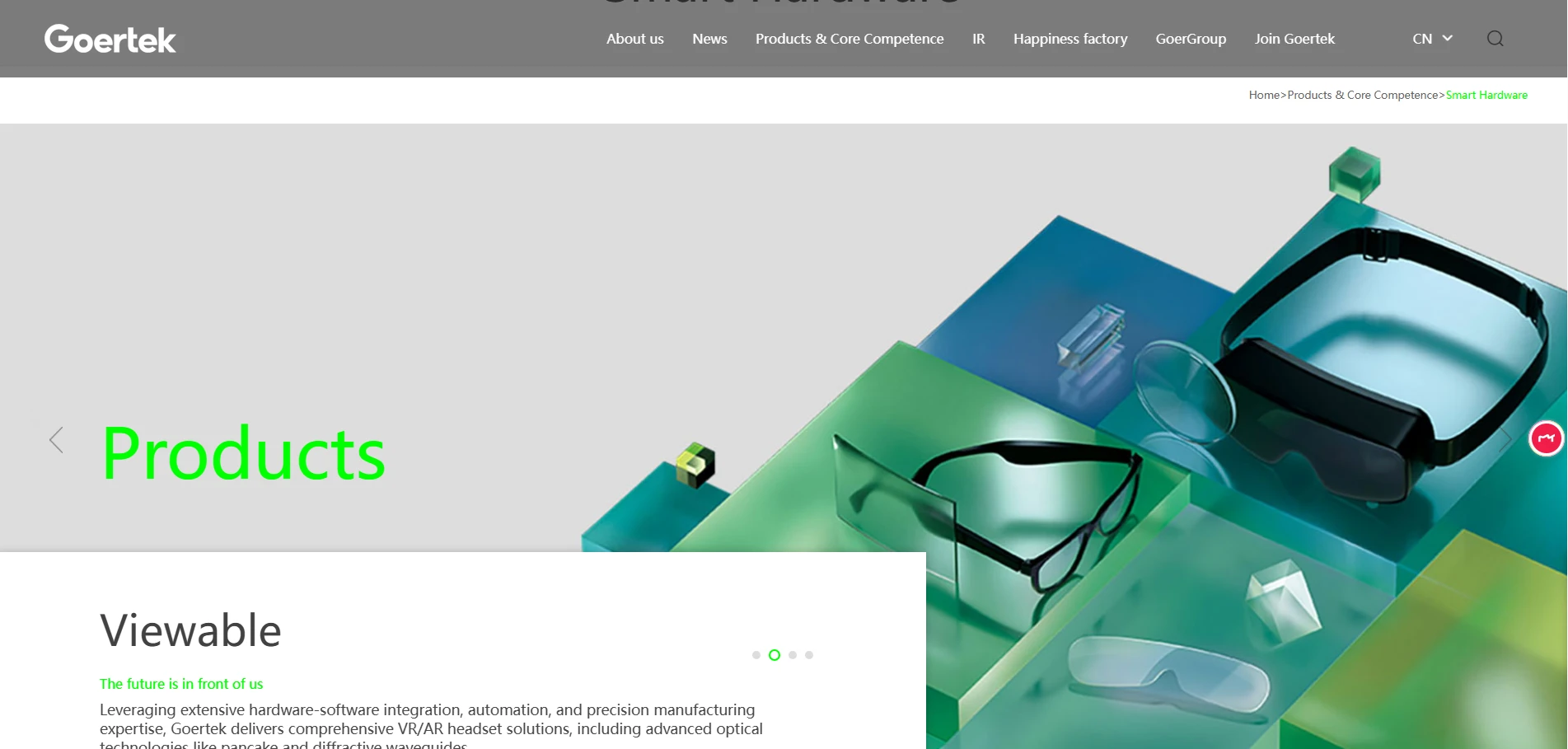
3. Goertek Inc.
- Introduction:Global leading ODM/OEM for VR/AR/AI glasses, providing one-stop manufacturing from optical modules to finished products. Annual capacity exceeds 1 million units.
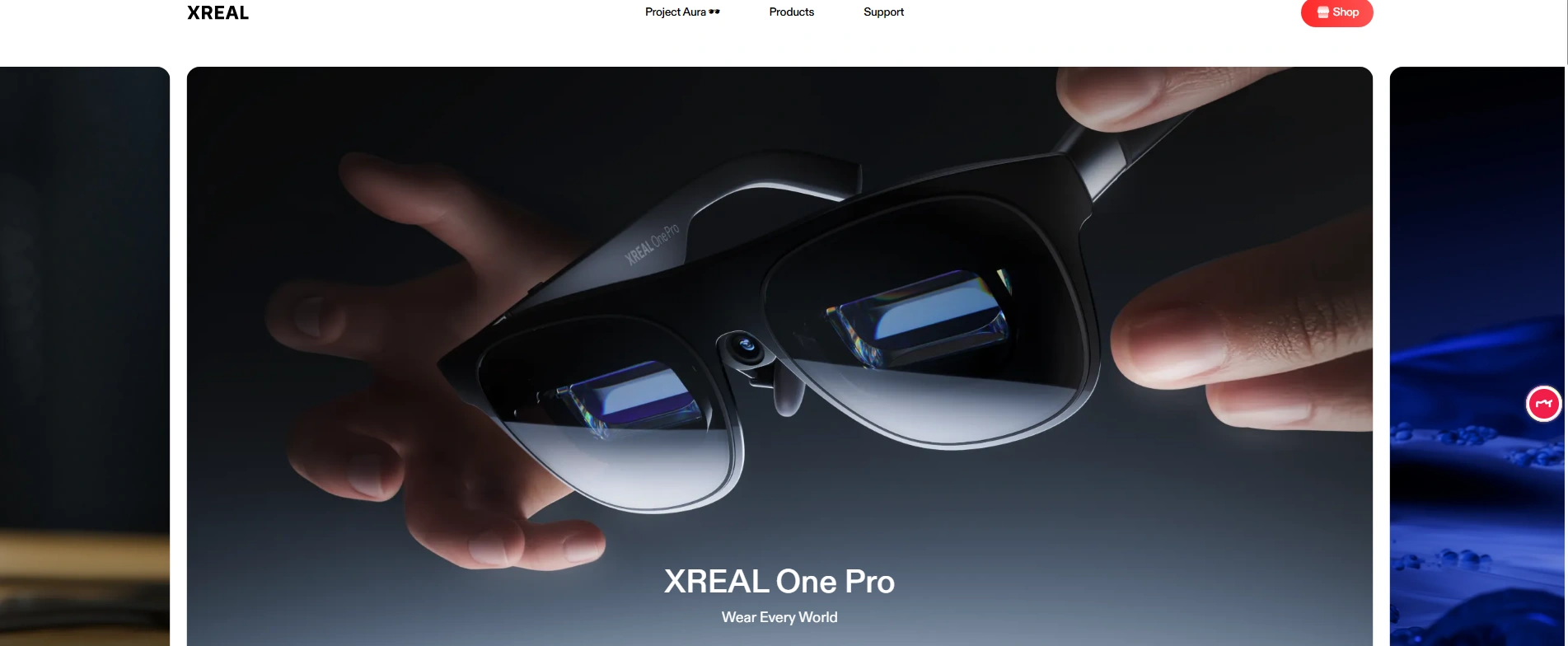
4. XREAL Technology (Shenzhen) Co., Ltd.
- Introduction:A top Chinese AR glasses exporter, leading Amazon sales for years. Focuses on lightweight split-type AR/AI glasses; overseas revenue accounts for over 60%.
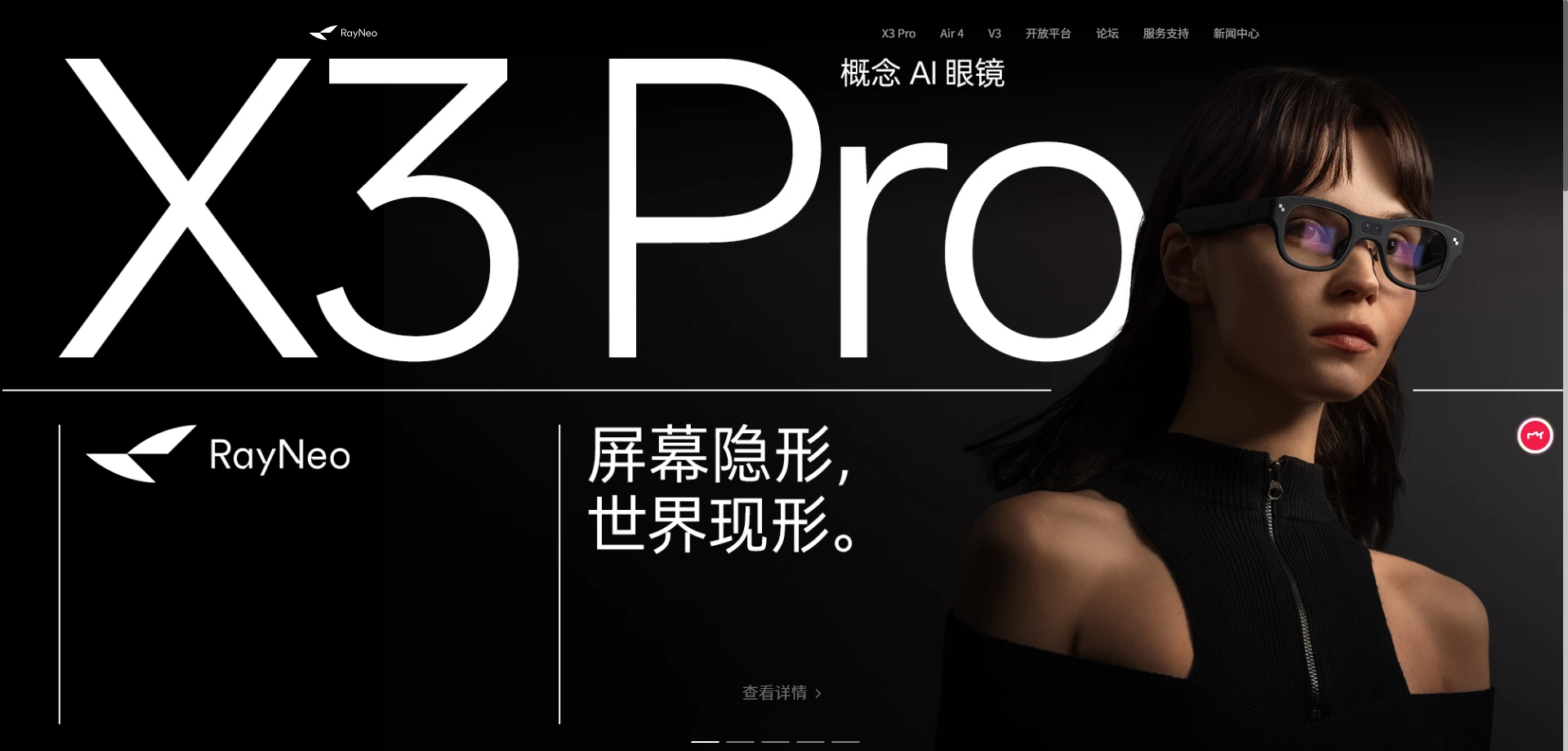
5. RayNeo Innovation Technology (Shenzhen) Co., Ltd.
- Introduction:A leading AR/AI glasses brand under TCL ecosystem, ranked No.1 in China market share in 2025. Specializes in full-color MicroLED waveguide and AI interaction; flagship models: RayNeo V3, Air series.
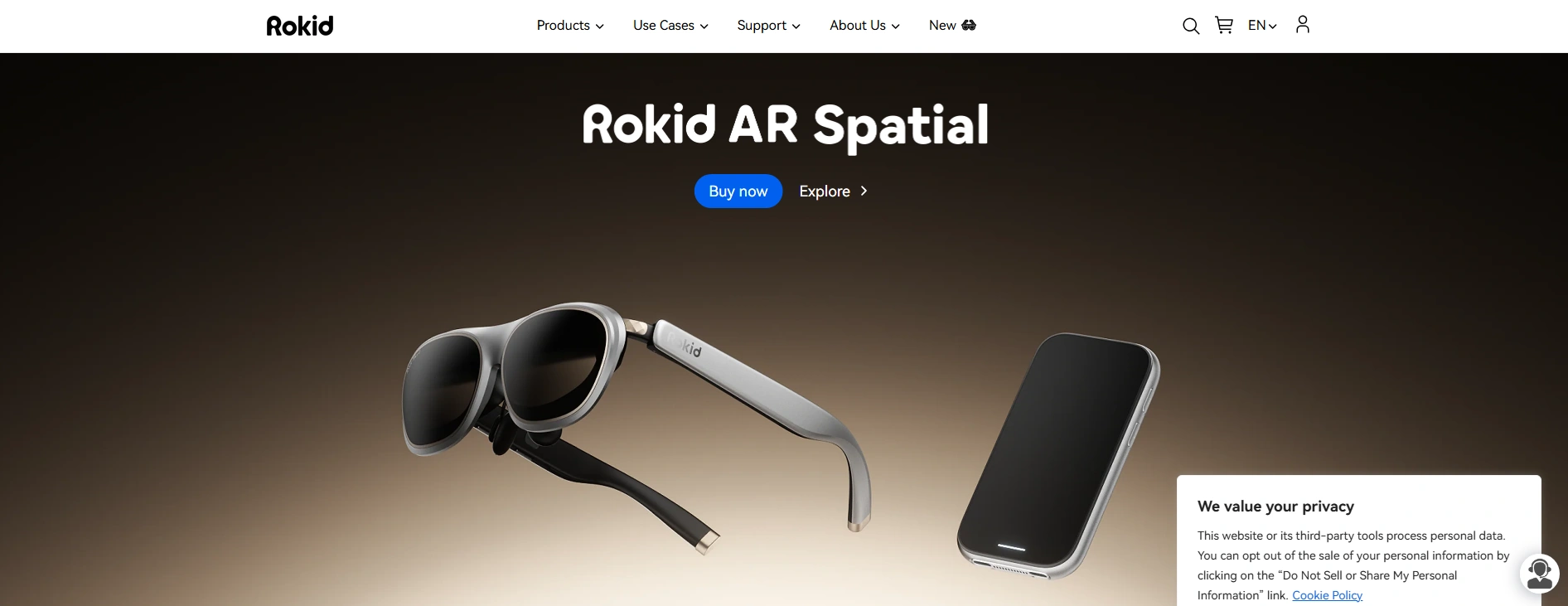
6. Beijing Lingban Technology Co., Ltd. (Rokid)
- Introduction:Pioneer in AR/AI glasses in China, focusing on binocular waveguide, AI translation and enterprise applications. Strong presence in both consumer and B2B markets.
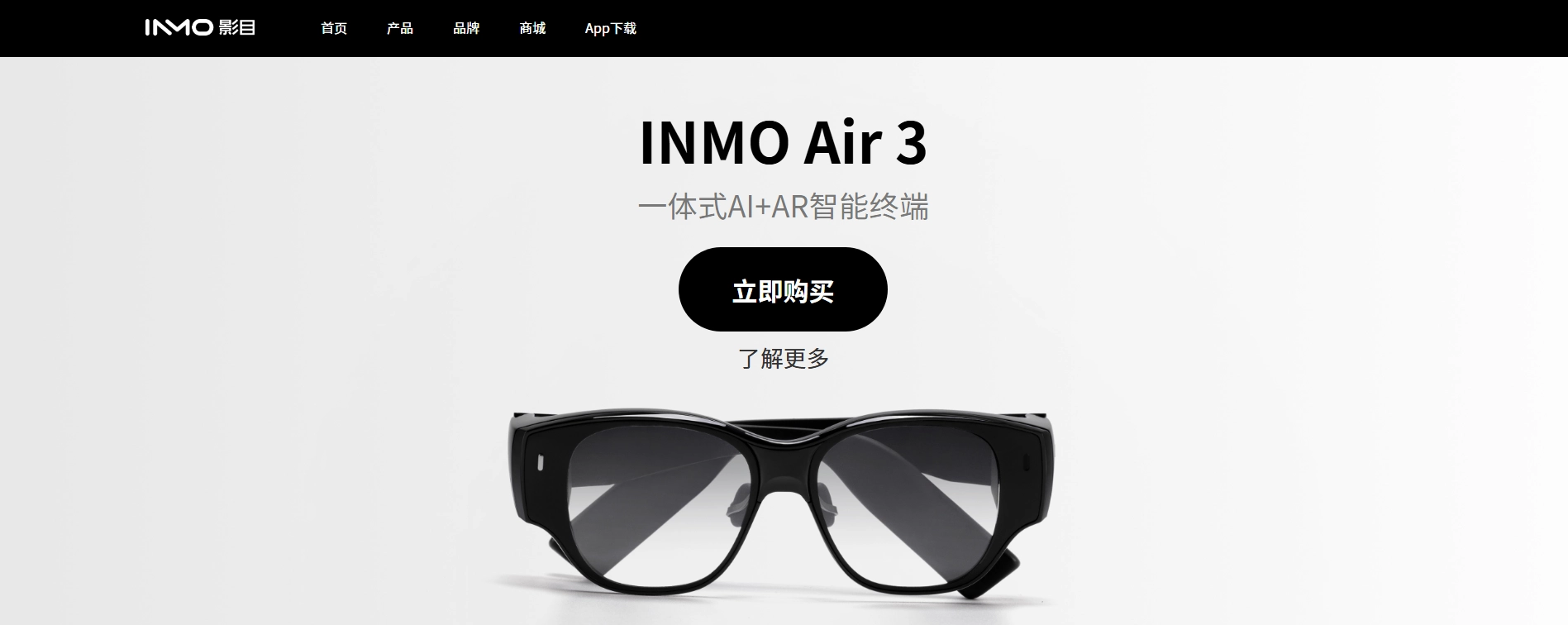
7. INMO Technology (Shenzhen) Co., Ltd.
- Introduction:Emerging consumer AI glasses brand, focusing on all-day wear, AI translation and social sharing. Lightweight and cost-effective.
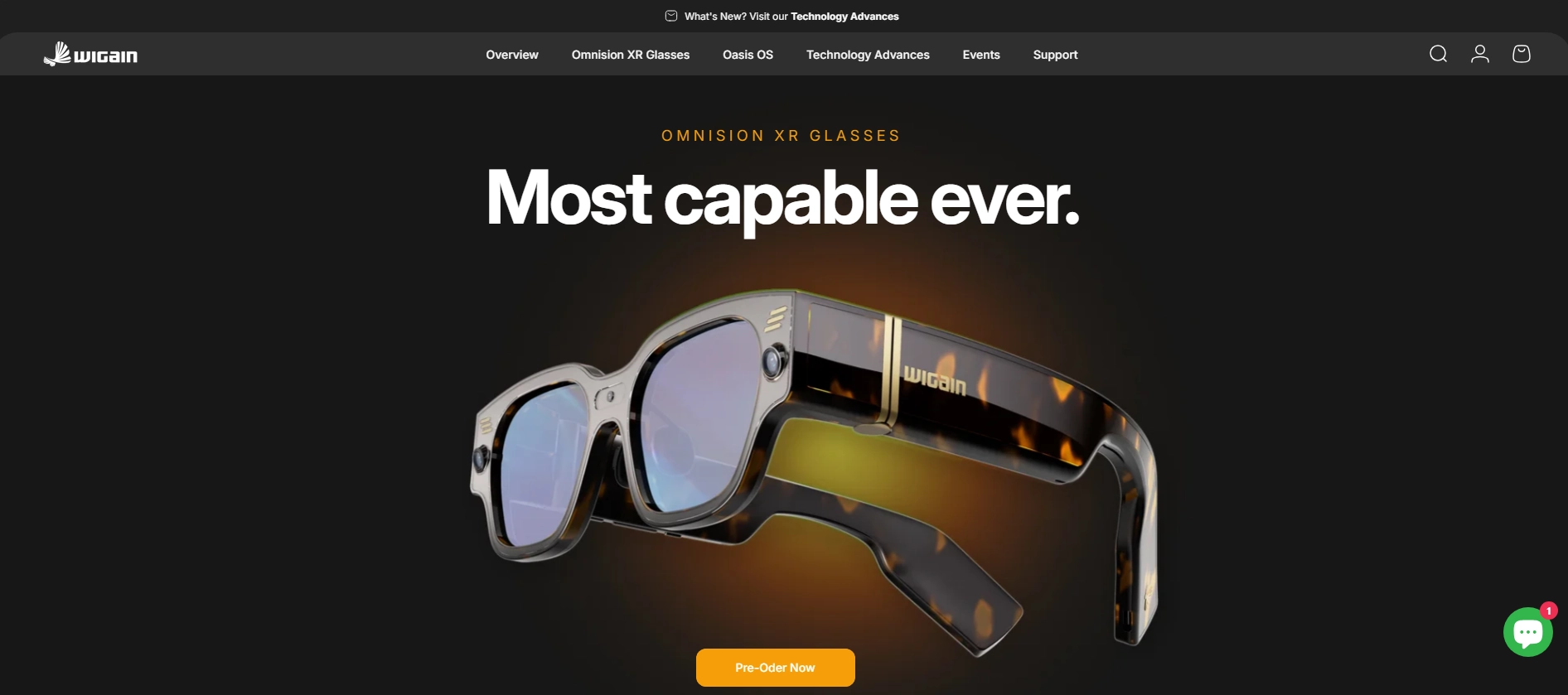
8. Hangzhou Wigain Technology Co., Ltd.
- Introduction:Alibaba-backed AI/XR company, specializing in full-color waveguide and large model interaction. Flagship: Wigain Omnision, optimized for outdoor bright environments.
9. Liweike Technology (Hangzhou) Co., Ltd.
- Introduction:Focuses on AI+AR interaction, all-day wear and vertical domain agents. Cooperates with telecom operators for industry applications.
10. Luxshare Precision Industry Co., Ltd.
- Introduction:Major consumer electronics manufacturer, engaged in precision manufacturing and ODM for AI glasses, supplying finished products and core components to multiple brands.
VII. Precautions for Purchasing AI Glasses: Making an Informed Decision
Once potential AI glasses suppliers and their products have been identified, the following steps should be followed to ensure a smooth procurement process and to mitigate the unique technical risks associated with smart wearables.
1. Prioritize Multi-Scenario Sample Testing
Before placing a large order, it is essential to order samples. Beyond assessing traditional craftsmanship (such as frame smoothness, hinge firmness, and weight balance), you must rigorously test electronic performance:
- Hardware Performance: Check camera clarity, microphone accuracy in windy environments, and directional audio privacy to ensure minimal sound leakage in public.
- Interaction Experience: Test the response latency of the AI voice assistant, the sensitivity of touch controls, and the accuracy of wear-detection sensors (auto-pause when removed).
- Thermal Management: Run AI functions like real-time translation or video recording for 15-30 minutes to ensure the battery and chipset areas do not overheat, guaranteeing user safety.
2. Evaluate Software Ecosystem and Compatibility
The value of AI glasses is split between hardware and software. You must evaluate the digital infrastructure:
- App Stability: Does the supplier provide a stable companion app? Does it support Over-the-Air (OTA) updates for bug fixes and AI model improvements?
- AI Model Integration: Confirm which Large Language Models (LLMs) are integrated (e.g., ChatGPT, Gemini, or Llama) and ensure these services are accessible in your target market.
- System Compatibility: Verify Bluetooth stability across various iOS and Android models and ensure the firmware supports multiple language interfaces.
3. Verify Battery Life and Charging Efficiency
Power management remains the primary challenge for AI wearables.
- Real-world Usage: Verify the actual duration for standby time, continuous audio playback, and high-intensity AI recognition or recording modes.
- Charging Solutions: Evaluate the convenience of the charging method (e.g., magnetic or Type-C). Ensure the batteries have necessary international safety certifications (UL, UN38.3, MSDS) for compliant air and sea freight.
4. Confirm Technical After-Sales and IP Support
AI glasses contain complex electronic components, requiring higher after-sales standards than traditional eyewear.
- Technical Support: Confirm if the supplier provides troubleshooting for software glitches and remote firmware recovery for batch issues.
- Warranty & RMA: Establish clear protocols for battery degradation, camera failure, or PCB malfunctions within the warranty period.
- IP Compliance: Ensure the design and optical solutions do not infringe on existing patents and that the product meets mandatory market certifications like FCC (US) or CE (EU).
5. Total Cost and Scalability Analysis
Account for hidden costs beyond the unit price:
- Subscription Fees: Determine if specific AI features require ongoing API call fees and who is responsible for these costs (supplier, brand, or end-user).
- Customization Costs: Confirm the Minimum Order Quantity (MOQ) and Non-Recurring Engineering (NRE) costs for customized UI, startup logos, or proprietary AI voice packs.
- Logistics Protection: AI glasses require anti-static and shock-proof packaging. Account for how increased packaging volume affects total shipping costs.
6. Conduct Comprehensive Due Diligence
Use professional verification to minimize collaboration risks:
- Production Qualifications: Use third-party services (SGS, Intertek) to verify ISO 9001 and electronics manufacturing licenses.
- Fulfillment Records: Investigate the supplier’s history in delivering smart hardware, specifically their ability to maintain high yield rates during mass production.
- Supply Chain Audit: Confirm their partnerships with major chip (e.g., Qualcomm, BES) or optical solution providers to ensure long-term technical support and component availability.
VIII. Choose IMEXsourcing as Your Sourcing Partner for AI Glasses in China
When it comes to procuring cutting-edge AI glasses from China, partnering with an experienced and reliable sourcing agent is paramount. IMEXsourcing stands out with a comprehensive service suite designed to streamline your technology acquisition process and secure exceptional value. Here are compelling reasons to select IMEXsourcing for your next AI glasses purchase:
Extensive Tech-Driven Procurement Expertise
IMEXsourcing boasts a profound history in the smart wearable industry, enabling us to identify and connect with top-tier Chinese AI glasses suppliers. Our deep market knowledge ensures we match you with manufacturers known for hardware stability and software excellence, covering everything from lightweight smart audio glasses (e.g., voice-assistant integrated, open-ear directional audio styles) to advanced multimodal AR glasses (e.g., real-time AI translation, Micro-OLED displays, and spatial computing capabilities).
Bespoke AI and Hardware Solutions
We understand that unique brand needs demand tailored technical solutions. IMEXsourcing empowers you to commission AI glasses aligned with your brand identity—whether it involves specific hardware components (such as Qualcomm Snapdragon AR chips, high-pixel low-power cameras, or high-capacity safe batteries), customized software experiences (such as integrated LLM APIs, custom APP interfaces, or localized voice packs), or ergonomic details (such as prescription-ready frame designs or ultra-light carbon fiber materials).
Rigorous Technical and Factory Audits
Our commitment to quality begins with specialized due diligence. For AI glasses, we conduct comprehensive factory audits that go beyond basic production, verifying clean-room environments for electronics assembly, assessing technical quality control protocols (e.g., PCBA stress testing, camera module calibration, battery cycle safety checks), and ensuring full compliance with international standards such as EU CE, US FCC, and global privacy regulations.
Strategic Price and Tech-Resource Negotiation
Leveraging our veteran status in the smart hardware sector, IMEXsourcing excels in complex cost-structure negotiations. We secure favorable pricing not only for hardware units but also for software licensing and NRE (Non-Recurring Engineering) terms. This expertise allows us to optimize your investment by ensuring access to top-tier craftsmanship and faster firmware update cycles from manufacturers renowned for their technical reliability.
Comprehensive Intelligent Quality Assurance
IMEXsourcing implements a robust quality management framework spanning the entire procurement cycle. This includes diligent production oversight (such as firmware flashing verification and hinge durability testing) and thorough pre-shipment testing (such as AI response latency assessment, audio leakage control, and anti-static packaging checks), guaranteeing the integrity and high-performance of every pair of AI glasses.
IX. Conclusion
In conclusion, the Chinese AI glasses market offers unparalleled opportunities for global buyers to access next-generation wearable technology. By researching diverse product categories—from audio-centric smart frames to advanced spatial computing AR glasses—and strictly verifying parameters like battery life and AI latency, importers can source high-quality, cost-effective devices to meet modern market demands.
With hubs like Shenzhen dominating over 80% of the global supply chain, China provides unmatched production efficiency and innovation. However, since many manufacturers lack expertise in global software compliance and multilingual technical support, partnering with IMEXsourcing is the optimal choice. We bridge the gap through rigorous factory verification, pre-shipment quality inspections, and cost transparency, minimizing international trade risks and ensuring your business maintains a competitive edge in the global AI wearable market.