Table of Contents
I. Introduction: Advantages of Chinese Peanut Grinders
China possesses the world’s most complete and concentrated industrial chain for food machinery. This means you can find every product type, from mini household models to large industrial-grade lines, from manual equipment to fully automated intelligent systems. No matter how specific or niche your requirements are, you can find a corresponding supplier.

II. Main types of Peanut Grinders
A peanut grinding machine is a food processing device used to crush and grind peanuts into powder or paste. It is widely used in home kitchens, food workshops, and industrial production for making peanut butter, peanut powder, seasonings, and more.Its main types include:
-
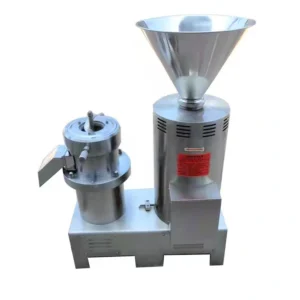
- Colloid Mill Type: Uses the high-speed relative rotation of the stator and rotor to generate shear and grinding forces, refining particles to the micron level. The resulting product is fine and uniform, suitable for commercial and industrial batch production.
-
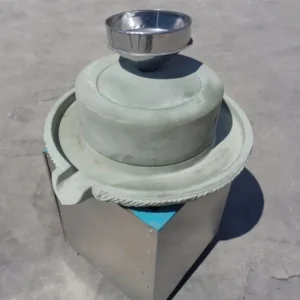
- Stone Mill Type: Employs natural stone grinding discs for low-speed, low-temperature, and eco-friendly processing. Preserves the natural flavor of peanuts and is ideal for artisanal workshops and specialty food processing.
-
- Twin-Screw Type: Features intermeshing twin screws for extrusion grinding, enabling continuous high-efficiency operation. Allows simultaneous addition of auxiliary ingredients and is compatible with industrial production lines.
- Vertical Circulation Type: Processes materials through multiple cycles of grinding for controllable fineness. Suitable for products requiring high smoothness, such as infant food-grade peanut butter.
III. How to Choose the Right Peanut Grinders: Five Key steps
Step 1: Clarify Product Requirements
• Product Type: Determine whether you need peanut butter (smooth/chunky), peanut powder, or compound seasoned paste.
• Capacity Requirement: Calculate hourly/daily production needs (household use <5 kg/h, small commercial use 10–50 kg/h, industrial use >100 kg/h).
• Quality Standards: Fineness requirements (e.g., 80–200 mesh), temperature control (whether low-temperature grinding ≤60℃ is required).
Step 2: Evaluate Raw Material Characteristics
• Preprocessing Level: Whole peanuts, halves, or pre-crushed peanuts.
• Oil Content: Variations among peanut varieties (high-oil types require better heat dissipation).
• Additives: Whether ingredients like sugar, salt, oil, or other nuts need to be added during grinding.
Step 3: Compare Equipment Types
| Equipment Type | Best For | Capacity Range | Temperature Control | Investment Level |
|---|---|---|---|---|
| Colloid Mill Type | Smooth paste | 20–500 kg/h | ≤60℃ | Medium |
| Stone Mill Type | Traditional chunky paste | 5–50 kg/h | ≤45℃ | Low–Medium |
| Twin-Screw Type | Compound paste | 100–1,000 kg/h | ≤70℃ | High |
| Vertical Circulation Type | Ultra-fine paste | 10–200 kg/h | ≤55℃ | Medium |
Step 4: Verify Technical Parameters
• Material Certification: Ensure food-grade 304/316 stainless steel for contact parts.
• Power Efficiency: Evaluate operating costs via specific energy consumption (kWh/kg).
• Adjustability: Range and precision of grinding gap adjustment.
• Cooling System: Effectiveness of water/air cooling configurations.
Step 5: Validate Supplier Qualifications
-
-
On-Site Testing: Provide raw materials for trial grinding to verify:
Continuous operation stability (≥2 hours).
Product uniformity and temperature.
Ease of cleaning. -
Document Review:
International certifications (CE/UL/FDA, etc.).
Material test reports.
Energy consumption test data. -
Service Assessment:
Spare parts supply cycle (recommended stock <7 days).
Technical response time (recommended <24 hours).
Warranty terms (recommended ≥12 months). - Decision Checklist
• Product type and capacity match ≥90%.
• Equipment operating costs fit within the budget.
• Supplier provides complete test reports.
• Availability of critical spare parts is confirmed.
• Production line space and power supply are compatible.
-
IV. How to Find Peanut Grinder Suppliers in China?
There are multiple ways to find wholesalers of peanut grinders and related products in China, as follows:
-
- Google Search Enter keywords like “China peanut butter machine manufacturer ” or “ndustrial peanut grinder supplier” to quickly screen top suppliers and check their official websites, technical specifications, and customer reviews.
- Industry Trade Exhibitions Attend major domestic and international oil processing and grain machinery exhibitions (e.g., China International Oils & Fats and Grains Expo) to communicate with suppliers face-to-face, understand product performance intuitively, and establish cooperation.
- Alibaba.com As a major cross-border B2B platform, enter keywords to find a large number of suppliers and communicate online regarding quotations, Minimum Order Quantities (MOQ), and customization needs (such as specifications for peanut grinders).
- 1688.com (China Domestic Wholesale Platform) This platform is primarily for buyers within mainland China and often offers the most competitive direct-from-factory prices. However, it is important to note that the site operates primarily in Chinese and does not directly support international shipping or English-language services.
- made-in-china.com Filter peanut grinders manufacturers by equipment category or location, and check quality inspection reports and export qualifications to effectively reduce procurement risks.
- Procurement Agent Hire a procurement agency like IMEXsourcing to accurately connect with manufacturers according to specific needs (e.g., capacity, raw material type). IMEXsourcing can provide 1688.com sourcing agent services, helping you navigate the language barrier, secure the best factory pricing, and assist with order tracking, equipment quality inspections, and logistics arrangements.
V. What are the Production Bases of Peanut Grinders?
1. Shandong Province (The Largest Base)
Complete Industrial Chain: Benefits from Shandong’s status as a major agricultural and food processing province, with easy access to peanut raw materials and downstream food factories.
Scale and Concentration: Home to some of the largest and most well-known manufacturers, offering a full range from household to industrial models.
Export Advantage: Major ports like Qingdao facilitate efficient international logistics.
2. Guangdong Province (High-Tech & Export Hub)
Technology & Innovation: Manufacturers here often focus on advanced models like colloid mill grinders and automated production lines, emphasizing R&D.
Export-Oriented: Strong experience in international trade, with products commonly meeting CE, UL, and other international standards. Communication and customization for foreign buyers are typically smooth.
Premium Market Focus: Tends to produce more mid-to-high-end equipment.
3. Henan Province (Cost-Effective & Traditional Hub)
Cost Leadership: Offers highly competitive pricing due to comprehensive inland industrial support and lower operational costs.
Strength in Traditional Models: A strong base for stone mill grinders and robust, simple mechanical designs.
Central Logistics: Serves as a major domestic transportation hub, facilitating distribution within China and to neighboring countries.
4. Zhejiang Province (Precision Machinery Hub)
Precision Manufacturing: Renowned for expertise in pumps, motors, and precision mechanical components, which benefits the production of high-quality grinding chambers and transmission systems.
Component Supplier: Many factories here supply critical parts to assemblers in other regions.
VI. Major Domestic Manufacturers of Peanut Grinders in China
1. Shandong Xianlin Stone Mill Co., Ltd.
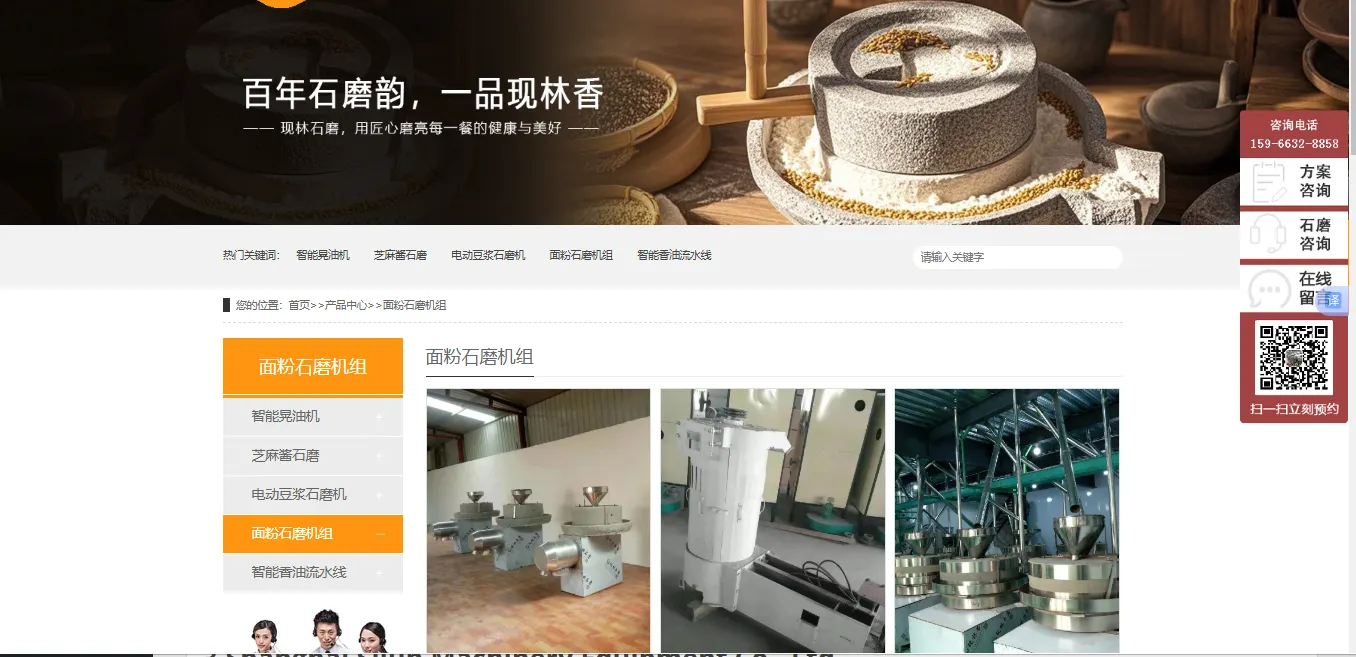
The company has been renamed Shandong Xianlin Stone Mill Co., Ltd. It is a specialized equipment manufacturer for agro-food processing that focuses on traditional stone mill craftsmanship, with particular distinction in stone mill equipment for grinding oily ingredients such as peanut butter and sesame paste.
2. Weifang Lehao Peanut Machinery Co., Ltd
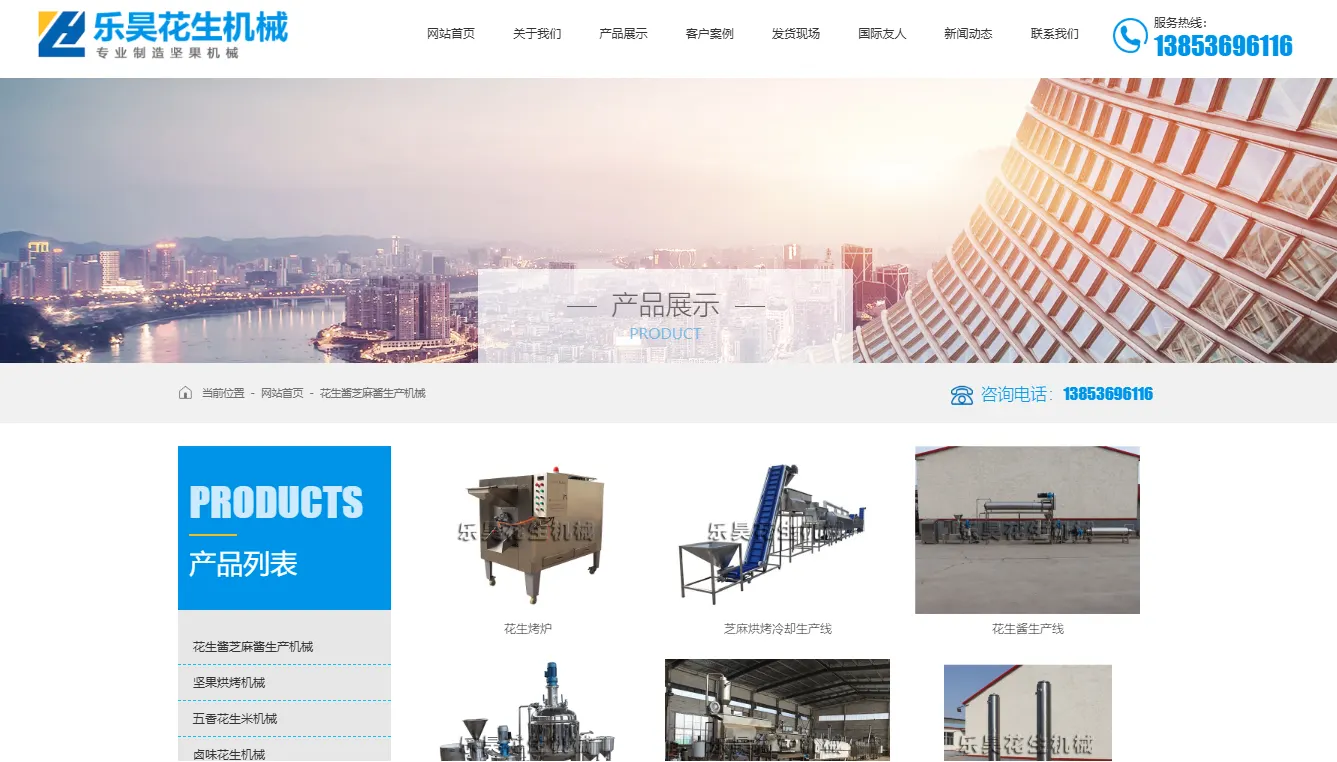
It is a specialized nut processing equipment manufacturer that integrates manufacturing and trade. It offers a comprehensive range of machinery, particularly for peanut-related processing, and its business also extends to international markets.
3.Shanghai Sijun Machinery Equipment Co., Ltd.
It is a Sino-German cooperative manufacturer of high-precision fluid processing equipment. Its main products include emulsifiers, colloid mills, homogenizers, etc., serving industries such as food and chemicals. Its equipment is suitable for liquid mixing and ultra-fine dispersion, not for dry crushing of nuts like peanuts.

4. Langfang Guantong Machinery Co., Ltd.
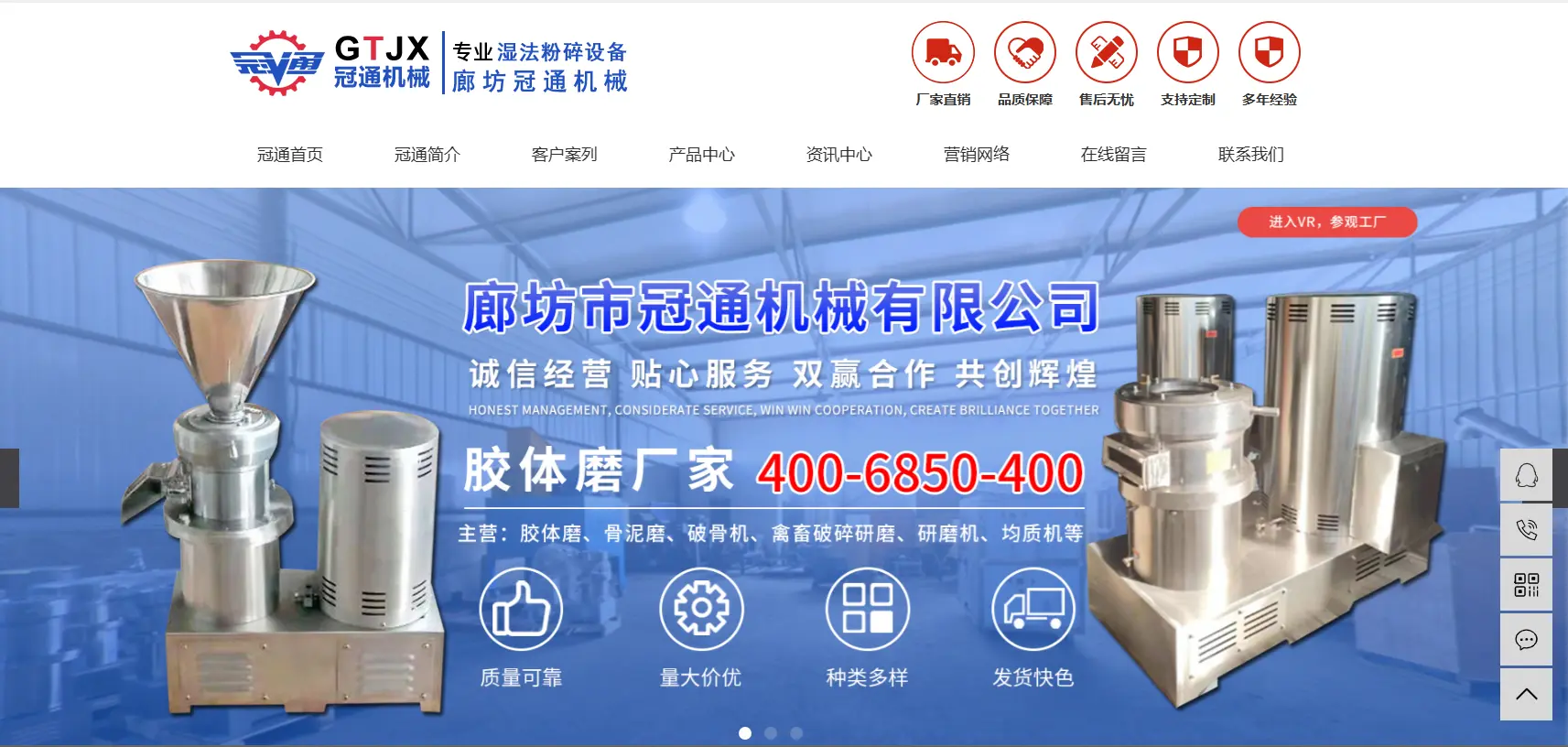
It is a professional manufacturer of wet fine grinding equipment. Its core products include colloid mills for superfine grinding and homogenization, homogenizers for mixing and stabilizing, ultra-micro grinders for higher demands, specialized bone processing equipment, and matching food processing tanks. The company offers services ranging from single machines to complete solutions, with products widely used in food (e.g., sauces, condiments), pharmaceutical, and chemical industries.
5. GELGOOG Machinery
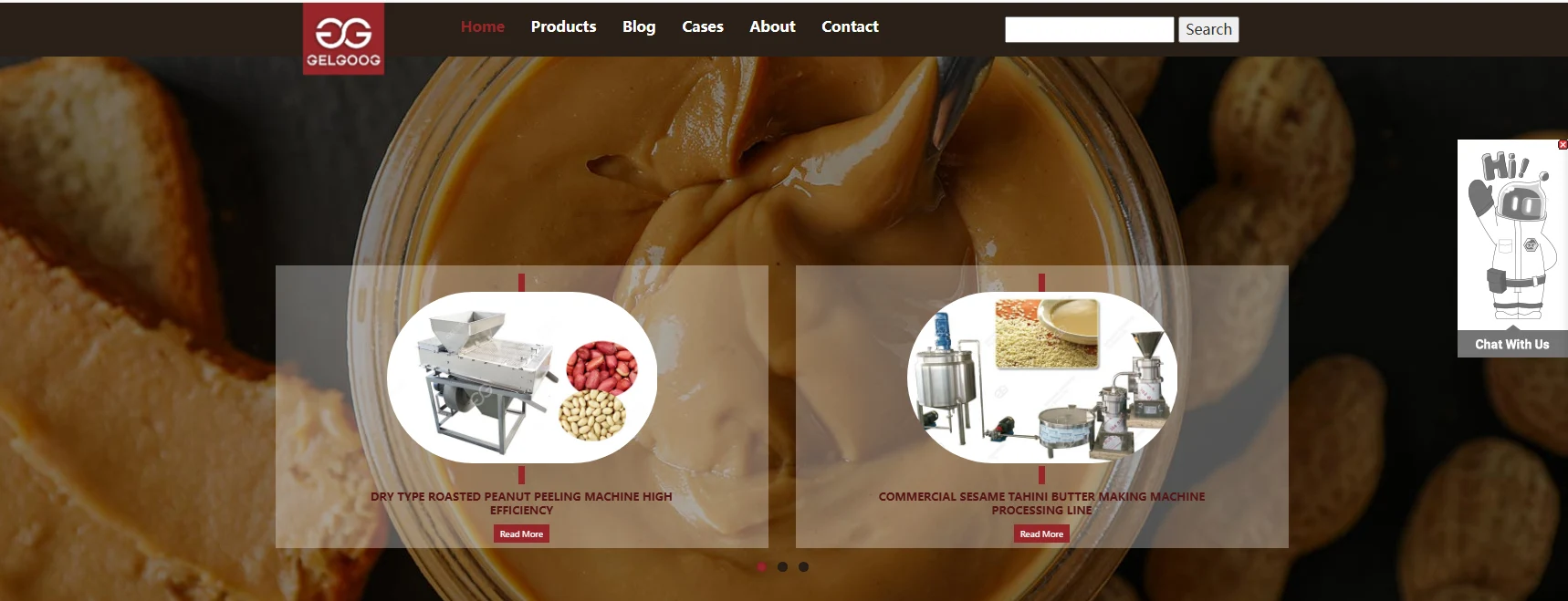
Founded in 2010, GELGOOG focuses on the processing of fruits, vegetables, nuts, cocoa and pastries, providing end-to-end integrated solutions of “food technology + production line equipment + full-process services”.
The core technology for peanut butter grinding machines is not overly complex, supported by China’s established industrial base of specialized suppliers. This means most manufacturers are small to mid-sized, not large-scale enterprises. Therefore, we have prioritized only the top 5 most reliable factories rather than providing an exhaustive list. When purchasing, the most critical steps are conducting an on-site factory visit and carefully inspecting the material and precision of the grinding heads (rotors and stators), which are the main wearing parts and directly determine the final product quality.
VII. Precautions for Purchasing Peanut Grinders : A Guide to Informed Decisions
After identifying potential peanut grinding machine suppliers and their products, follow these steps to ensure a smooth and informed procurement process:
- Request Trial Runs or Sample Testing First: Always request a video of the equipment trial run using your specific raw materials (e.g., roasted or raw peanuts of your typical grade and moisture content) or arrange a site visit for testing before placing bulk orders. Check core performance metrics such as whether the actual grinding fineness and consistency meet your standards, if the machine’s temperature control effectively prevents overheating and preserves flavor, the equipment’s stability and noise level during continuous operation, and the ease of cleaning and maintenance. Also, confirm the machine can handle your target throughput and peanut varieties.
- Evaluate Production and Customization Capabilities: Inquire about the supplier’s production capacity and standard delivery timeline to ensure they can fulfill bulk or customized orders (e.g., specific grinding disc/stone materials, special motor power requirements, feed rate adjustments, or integration into a full production line). Confirm the consistency and quality of key components (e.g., the hardness and precision of grinding parts, the grade of stainless steel used in contact surfaces).
- Consider After-Sales Support and Spare Parts Supply: Confirm the supplier offers comprehensive after-sales guarantees, such as remote guidance/on-site maintenance support for equipment failures, replacement of parts damaged during transit, and technical assistance for installation and calibration. Clarify the warranty period, availability, and long-term supply capability for critical wear-and-tear parts (such as grinding discs/stones, blades, seals, and bearings).
- Calculate Total Cost of Ownership (TCO): Beyond the unit price of the grinding machine itself, include costs for necessary auxiliary equipment (e.g., feeders, cooling systems, downstream mixing or packaging units), freight charges, on-site installation and commissioning costs, and the long-term energy consumption (electricity) along with routine maintenance and part replacement expenses. TCO provides a more accurate financial picture than the upfront price alone.
- Verify Qualifications and Certifications: Utilize available resources to check if the supplier holds relevant industry certifications (e.g., ISO 9001 Quality Management, CE Marking for machinery safety). Crucially, ensure the materials used in the grinding chamber and all parts contacting the product adhere to Food Contact Safety Standards (such as FDA or EU regulations for food-grade materials).
VIII. Choose IMEXsourcing as Your Peanut Grinders Sourcing Partner in China
When procuring high-quality peanut grinding machines and complete grinding processing equipment from China, partnering with an experienced and reliable sourcing agent is crucial. IMEXsourcing offers a comprehensive service portfolio to streamline your procurement process and ensure exceptional value, with the following core advantages:
- Extensive Industry Procurement Experience: With years of experience in sourcing nut and food processing machinery, we accurately connect you with top-tier Chinese suppliers. Our product range is comprehensive, covering everything from stone grinding mills and high-speed shear grinders to fully automated peanut butter production lines and integrated cooling-grinding systems, as well as supporting pre-processing (e.g., roasting, peeling) and post-processing (mixing, filling) systems. This meets your diverse needs for different capacities, processes, and finished product specifications.
- Tailored Solutions: We support in-depth customization based on your specific requirements, including equipment capacity and power configuration, selection of materials for core grinding components (such as grinding discs, stones, and blades), structural adaptations for specific raw material characteristics (e.g., oil content and hardness of different peanut varieties), and industrial automation system configuration (such as precise grinding temperature control, online particle size monitoring, and full-process linkage). This ensures the equipment perfectly matches your production scale, raw material properties, and final product quality standards (e.g., fineness, texture, freshness).
- Stringent Supplier Verification: We conduct thorough factory audits of our manufacturing partners, verifying their production capacity, technical design capabilities, and quality control systems. We ensure suppliers hold relevant certifications (e.g., ISO 9001, CE) and that their products comply with domestic and international safety and performance standards (such as grinding stability, food-grade contact material compliance, hygienic equipment design, motor efficiency, and noise control).
- Professional Negotiation Capabilities: Leveraging industry resources and aggregated purchasing volume, we secure the most favorable pricing and contract terms for you, reducing procurement costs while avoiding potential hidden expenses such as substandard materials or delivery delays.
- Full-Cycle Quality Assurance: We implement a rigorous end-to-end quality management process, including sample confirmation, production process monitoring, and pre-shipment inspection (focusing on key checks such as precision and material quality of core grinding components, equipment assembly quality, hygiene and cleanliness, and the completeness of wearable spare parts). This ensures stable and reliable quality for every delivered peanut grinding machine and complete set of equipment.
IX. Conclusion
The Chinese peanut grinding machine market presents significant opportunities for global buyers. By clearly defining core technical parameters such as grinding fineness, throughput efficiency, temperature control, and food-grade material compliance, and selecting suitable equipment for various nut types and processing scales, importers can source high-quality, cost-effective machinery.
Partnering with IMEXsourcing is crucial for ensuring procurement success. We understand the risks associated with precision manufacturing and process integration in the grinding equipment industry. IMEXsourcing leverages deep knowledge of core production bases like Shandong and Henan, enabling swift on-site technical audits and production supervision. By verifying a factory’s operational status, financial stability, and past delivery performance, we help you identify the most reliable and technically proficient manufacturers at the source, effectively preventing financial losses and procurement delays caused by supplier issues.